
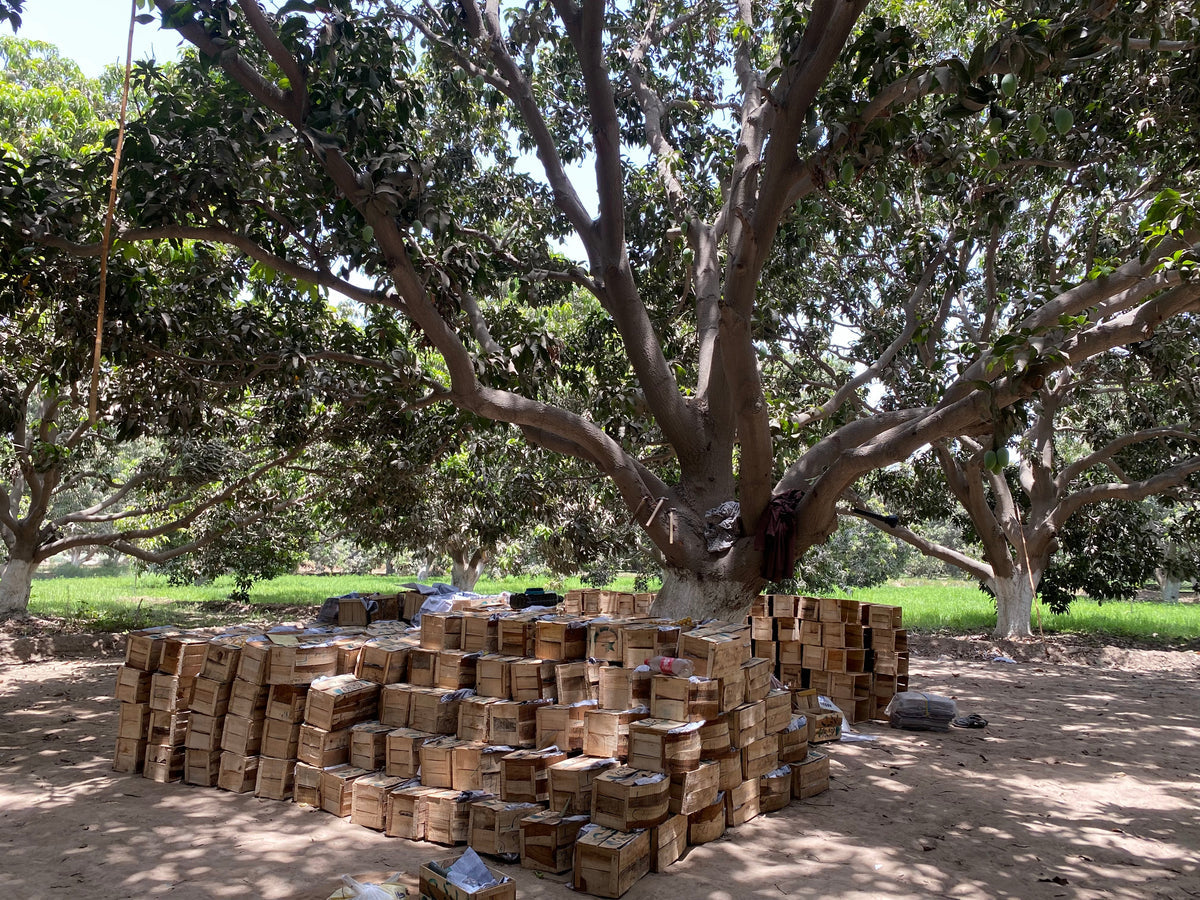
Premium Mango Brands in Pakistan: What to Look For
Pakistan is home to some of the world's most celebrated mangoes, yet not every seller deserves the label premium mango brand. The difference between a box that arrives fragrant and orchard-fresh versus one that disappoints at the table comes down to decisions made weeks before delivery — how the fruit was ripened, graded, packed, and handled through the cold chain. If you are searching for the best mango brand in Pakistan, this guide will help you evaluate what actually matters and why those standards are worth paying attention to.
Pakistan produces more than 1.7 million tonnes of mangoes annually, with Punjab and Sindh accounting for the bulk of commercial output. Most of that volume moves through middlemen, wholesale markets, and informal ripening sheds. A genuine premium mango brand Pakistan buyers can trust is one that controls the supply chain end-to-end — from the orchard to your door — and makes verifiable commitments about ripening methods, variety selection, and post-harvest handling. Those commitments separate brands worth their price from those that are simply repackaging commodity fruit in attractive boxes.
In this article we break down the eight qualities that define a true premium mango company in Pakistan, walk through every major variety and its ideal season, explain how to identify artificially ripened fruit, and give you a practical checklist to use before placing any order.
Why "Premium" Means More Than a Nice Box
It is tempting to judge a mango brand by its packaging photography. Glossy brochures and premium-looking boxes are cheap to produce; orchard discipline is not. Real premium positioning is built on four pillars that cannot be faked once the fruit is in your hands.
1. Carbide-Free Ripening
Calcium carbide is a chemical accelerant widely used in South Asian fruit markets to force colour change and surface softness within 24–48 hours. The practice is banned in many countries and the WHO has flagged acetylene — the gas calcium carbide releases — as a health hazard. Carbide-ripened mangoes look ripe but taste flat, develop uneven internal texture, and spoil faster once the chemical process stalls. Any brand serious about quality will state its ripening policy clearly and invite scrutiny. If a seller cannot tell you how their fruit was ripened, assume the worst. You can learn more about the physical signs in our guide on how to spot carbide-ripened mangoes.
2. Harvest Timing
Tree-ripened fruit — left on the branch until the variety's natural sugar conversion is complete — is what separates an extraordinary mango from a merely adequate one. Farmers who harvest early to extend shelf life for wholesale markets sacrifice Brix levels (natural sugar content), aroma volatiles, and the characteristic flesh texture of each variety. Premium brands pick at peak ripeness and manage shelf life through cold chain rather than early harvest.
3. Grading and Defect Sorting
A properly graded box will contain fruit of consistent size and maturity with no visible bruising, soft spots, or lenticel discolouration. Grades matter because inconsistent sizing means uneven ripening in the box — smaller fruits over-ripen while larger ones are still firm. Any online mango brand charging premium prices should specify its grading standard and tolerate returns for off-grade boxes.
4. Post-Harvest Cold Chain
Mangoes are climacteric — they continue to ripen after harvest. Temperature management between 10–13°C slows ethylene production and extends the window between optimal ripeness and over-ripeness. Brands that cold-store, cold-transport, and pack in insulated or ventilated boxes are protecting the quality you paid for. Ask any brand about their storage and logistics setup before ordering.
The Pakistani Mango Variety Calendar: Matching the Brand to the Season
One of the clearest markers of a knowledgeable premium mango company Pakistan side is their transparency about variety seasonality. Anyone selling "mangoes" without specifying variety and peak month is treating all fruit as interchangeable — which it is not. The table below shows the five principal premium varieties, their peak months, and the sensory profile you should expect from genuinely ripe examples.
| Variety | Peak Season | Skin Colour at Ripeness | Flavour Profile | Distinguishing Trait |
|---|---|---|---|---|
| Sindhri | Late May – June | Golden yellow | Honeyed, mild, low-acid | Completely fibreless flesh; elongated shape |
| Langra | July | Green, stays green even ripe | Tangy-sweet, aromatic, complex | Stays green when ripe — a major cause of carbide misuse on this variety |
| Anwar Ratol (incl. 12 Number Ratol) | July – early August | Yellow-orange, small fruit | Intensely sweet, almost confection-like | Paper-thin seed; very short window at peak ripeness |
| Nawabpuri White Chaunsa | August | Pale yellow-green | Buttery, rich, low-fibre | Royal lineage; named for the Nawab of Bahawalpur's orchards |
| Mosami White Chaunsa | August | Pale with occasional blush | Sweet, creamy, milder than Nawabpuri | Slightly longer shelf-life than Nawabpuri; excellent for gifting |
If a brand is offering Sindhri in August or Anwar Ratol in May, those are red flags. Either they are mislabelling variety, selling last season's cold-store fruit, or sourcing outside their stated region. A trustworthy farm-to-door mango brand will tell you when each variety ships and will pause orders between seasons rather than substitute inferior fruit.
What "Farm-to-Door" Actually Requires
The phrase farm-to-door has become marketing shorthand, but it describes a specific operational model that most sellers cannot actually execute. A genuine farm-to-door mango brand in Pakistan must:
- Own or lease the orchard producing the fruit (not purchase from commission agents at Multan or Rahim Yar Khan mandis)
- Control the harvest date and method — hand-picking with stems intact to prevent stem-end rot
- Operate or contract dedicated post-harvest washing, drying, and packing facilities at or near the orchard
- Manage last-mile delivery directly or through a tracked, temperature-aware logistics partner
- Provide a single point of accountability — if the fruit is poor, there is no "supplier" to blame
This model is more expensive and more demanding than buying finished boxes from a wholesale market. That cost difference is what you are paying for when you choose a premium brand over a general fruit retailer. The MMA Farms family orchard in Multan is an example of this model: three generations of orchard management, the same land, the same trees, harvested under the direct oversight of the Malik family.
How to Evaluate Any Online Mango Brand Before You Order
Buying mangoes online in Pakistan has become significantly easier over the past five years, but the number of sellers claiming premium status has grown faster than the number who can deliver on that claim. Here is a practical checklist.
Verify the Orchard Claim
Ask for the orchard location (district, tehsil, or GPS coordinates are ideal). Multan, Muzaffargarh, Rahim Yar Khan, Mirpur Khas, and Tando Allah Yar are the major premium-mango growing belts. A seller based in Karachi or Lahore who claims their own orchard without providing location detail is likely a reseller.
Check Ripening Policy in Writing
The policy should be stated on the product page, not just in response to direct questions. "Carbide-free" is the minimum standard. Better brands will explain their actual ripening method — whether that is allowing full tree-ripening, ethylene gas chambers (safe and regulated), or straw ripening at ambient temperature.
Understand the Return and Freshness Guarantee
Premium fruit is perishable. A brand confident in its quality will offer a clear freshness guarantee — usually a photo-based claim process within 24 hours of delivery. No refund policy or vague "contact us" language is a warning sign.
Look at Packaging Specifics
5 kg is the standard premium gift box size in Pakistan. Check whether the box uses dividers or padding to prevent bruising in transit, whether fruit is individually wrapped, and whether there is ventilation to prevent condensation. These are not cosmetic features — they protect the eating experience.
Assess Seasonal Honesty
Does the brand close pre-orders when a variety sells out, or do they keep taking orders and substitute silently? Do they specify exactly which variety is shipping right now? Seasonal honesty is one of the strongest trust signals an online mango brand can show.
Pricing Tiers: What Should a Premium Box Cost?
Pakistani mango prices vary significantly by variety, season timing, and quality grade. The table below reflects 2026 season pricing for 5 kg gift boxes from direct farm brands. Prices at general retailers or wholesale apps will be lower but usually reflect lower grading standards and less transparent sourcing.
| Variety | 5 kg Box Price Range (PKR) | Notes |
|---|---|---|
| Sindhri | Rs 2,550 – Rs 2,800 | Early-season availability; most accessible entry point |
| Langra | Rs 2,650 – Rs 2,900 | Short peak window; strong gifting demand |
| Anwar Ratol / 12 Number Ratol | Rs 2,950 – Rs 3,150 | Highest per-kg premium due to small fruit size and short season |
| Nawabpuri White Chaunsa | Rs 2,950 – Rs 3,150 | Commands royal premium; limited annual supply |
| Mosami White Chaunsa | Rs 2,950 – Rs 3,150 | Slightly larger crop than Nawabpuri; marginally more accessible |
If a brand is selling premium-labelled Anwar Ratol at Rs 1,500 per 5 kg, either the grading is minimal, the variety claim is inaccurate, or the fruit is last-season cold store. The prices above represent real farm-level economics once harvest, grading, packaging, and direct logistics are factored in.
Packaging and Gifting: The Premium Presentation Standard
Corporate gifting, Eid gifting, and overseas gifting for Pakistani diaspora have driven significant growth in premium boxed mangoes. For these use cases, presentation matters almost as much as the fruit itself. The best mango brand Pakistan buyers choose for gifting will typically offer:
- Rigid or semi-rigid outer box with magnetic or fold-lock closure
- Individual fruit pockets or shredded-paper padding to prevent contact bruising
- A grower's note or harvest information card (variety, orchard, harvest date)
- Brand-consistent design that feels premium when received, not like a repurposed fruit crate
- The option to include a personalised message for gifting occasions
Packaging should not just look beautiful — it should communicate the values of the brand inside. A hand-written harvest note from a three-generation orchard family means something. Generic mass-market packaging communicates nothing except that the seller is moving volume.
Shipping: Free Delivery, COD, and Worldwide Options
Logistics capability is where many otherwise solid farm brands fall short. Nationwide coverage in Pakistan with free delivery and Cash on Delivery (COD) is the baseline expectation for any serious direct-to-consumer mango brand today. COD matters because it reduces the trust barrier for first-time buyers who cannot inspect fruit before payment — it signals that the brand is confident enough in its product to take that risk.
Worldwide shipping is a different and considerably more complex undertaking. Fresh mangoes are subject to phytosanitary restrictions in most import markets. A brand that genuinely offers international shipping must have the necessary export permits, use refrigerated air freight or approved packaging protocols, and be honest about the countries it can serve. Vague "worldwide shipping available" claims without specifics deserve follow-up questions.
For Pakistani diaspora sending mangoes home to family — or ordering from abroad for domestic delivery — the combination of COD, free domestic delivery, and verified international capability is the gold standard to look for.
The Role of Orchard Heritage and Family Provenance
Pakistani mango culture is inseparable from specific orchards and families. The best varieties were cultivated and refined over generations — the Ratol family's Anwar Ratol, the Langra's Varanasi origin (brought to the subcontinent centuries ago), the Chaunsa's association with Sher Shah Suri's court. Orchard heritage is not just marketing narrative; it reflects actual knowledge accumulated about microclimate management, irrigation timing, and harvest indicators that cannot be learned from a textbook in a single growing season.
When a brand can trace its orchard lineage clearly — founders' names, founding decade, generational continuity — that is a credibility signal that commodity resellers cannot replicate. It also creates accountability: a family that has farmed the same land for three generations has far more to lose from cutting corners than a seasonal trader sourcing from multiple agents.
MMA Mangoes: How One Farm-Direct Brand Approaches These Standards
Without over-selling, it is worth walking through a specific example of how these principles apply in practice. MMA Mangoes is a family-run orchard brand from Multan, founded by the late Haji Laal Muhammad and operated today by his sons Malik Muneeb Altaf and Malik Moghees Altaf. The orchards are in Multan — the heartland of Pakistani premium mango production — and the family has been farming them across three generations.
Their stated commitments include carbide-free ripening, hand-picking at peak ripeness, cold-chain handling from orchard to pack, and graded 5 kg premium gift boxes. They offer free delivery nationwide across Pakistan, COD for domestic orders, and worldwide shipping. The varieties rotate through the season — Sindhri in June, Langra and Anwar Ratol (including the sought-after 12 Number Ratol) in July, Nawabpuri and Mosami White Chaunsa in August — and boxes are only available while that variety is genuinely in season.
It is a small detail, but the brand was featured on a billboard in Times Square, New York — a recognition that reflects genuine export-market credibility beyond the domestic market. If you want to explore their current season availability, you can browse their premium Pakistani mango gift boxes directly.
Red Flags to Watch For Across Any Brand
To summarise the consumer-protection angle of this guide, here are the most common warning signs when evaluating any premium mango brand in Pakistan:
- No ripening policy stated. If it is not on the website, assume carbide.
- Prices significantly below market. Quality mango production is not cheap; steep discounts usually reflect grade or freshness compromises.
- Vague orchard claims. "Our farm in Punjab" tells you nothing. Ask for specifics.
- No variety-specific seasonality. Brands that list all five major varieties as "available year-round" are almost certainly cold-storing or mislabelling.
- No returns or freshness guarantee. A confident quality producer has no reason to avoid a photo-based freshness claim process.
- Overly polished marketing with no human story. Family farms have real people behind them — founders, farmers, harvest crew. If the brand feels entirely corporate with no personal narrative, probe the source claims harder.
- Social media with no field/orchard content. Genuine farm brands post harvest videos, orchard updates, and the real visual chaos of a working mango operation. Studio-only photography can be a signal of a reseller.
Frequently Asked Questions
What makes a mango brand "premium" in Pakistan?
A premium mango brand in Pakistan is one that controls the full supply chain from orchard to customer — owning or directly managing the orchard, harvesting at natural peak ripeness without calcium carbide, grading fruit to consistent size and quality standards, using cold-chain logistics to preserve freshness, and offering direct accountability through a clear returns or freshness guarantee. Premium pricing reflects those operational investments, not just better packaging.
How do I know if mangoes have been ripened with calcium carbide?
Carbide-ripened mangoes often show uniform yellow or orange colour on the outside while the flesh near the seed and stem remains pale, underripe, or starchy. The aroma is muted compared to naturally ripened fruit, and the taste tends to be flat or one-dimensional. The skin may feel soft at the tips while the stem end is still firm. For a detailed physical checklist, see our article on how to spot carbide-ripened mangoes.
Which Pakistani mango variety is sweetest?
Anwar Ratol — particularly the small, intensely flavoured 12 Number Ratol — is widely regarded as the sweetest Pakistani mango variety. Its Brix level (natural sugar concentration) is among the highest of any commercial mango in South Asia. White Chaunsa varieties (Nawabpuri and Mosami) are buttery and rich. Sindhri is the most accessible and beloved for its honeyed flavour and completely fibreless flesh. Sweetness is subjective, but Anwar Ratol commands the highest per-kilogram premium in the domestic market for this reason.
Can I order Pakistani mangoes online with Cash on Delivery?
Yes. Several farm-direct and premium mango brands in Pakistan offer Cash on Delivery (COD) for domestic orders. COD is an important consumer-protection feature for perishable fruit purchases — it means you pay when the box is in your hands, not before. Look for brands that combine COD with a free nationwide delivery policy and a freshness guarantee. MMA Mangoes offers all three for Pakistani domestic orders.
What is the best month to buy Pakistani mangoes?
It depends on which variety you prefer. Sindhri peaks in June and is the first major premium variety of the season. Langra and Anwar Ratol (including 12 Number Ratol) peak through July. White Chaunsa varieties — Nawabpuri and Mosami — are at their best in August. If you want to try multiple varieties across the season, the best approach is to order from a brand that ships each variety only during its genuine peak window rather than year-round.
Do Pakistani premium mango brands ship internationally?
Some do. International fresh mango exports require phytosanitary certification, proper export permits, and appropriate cold-chain air freight logistics. The Pakistani diaspora in the UK, UAE, Canada, the USA, Saudi Arabia, and Australia is the primary driver of international demand. A brand that genuinely ships internationally should be able to specify which countries it serves, what the transit time is, and what happens if fruit is held at customs. MMA Mangoes offers worldwide shipping — contact via WhatsApp on +92 300 9555810 to confirm availability for your country before ordering.
The mango season in Pakistan is short, intensely seasonal, and worth doing properly. Whether you are ordering for yourself, as an Eid or Ramazan gift, or as a corporate gesture, choosing the right premium mango brand Pakistan buyers can trust comes down to the eight criteria in this guide: carbide-free ripening, honest variety labelling, orchard traceability, cold-chain handling, grading transparency, seasonal integrity, clear logistics, and real human accountability behind the brand. Apply that lens and the field narrows quickly.
If you are ready to order this season, explore the current selection of premium Pakistani mango gift boxes from MMA Mangoes — farm-direct from Multan, carbide-free, with free delivery nationwide across Pakistan, Cash on Delivery, and worldwide shipping available. For variety availability, bulk orders, or gifting enquiries, message us on WhatsApp at +92 300 9555810. The season is short; the best boxes sell out variety by variety.
Hand-picked from our 3-generation Multan family farm, cold-chain delivered nationwide, Cash on Delivery on every order.
Shop the Nawabpuri White Chaunsa Premium Box → Shop the Mosami White Chaunsa Box