
Mango Falooda Recipe (Creamy Pakistani Dessert)
A good mango falooda recipe does not need much convincing — it is one of those Pakistani desserts that people remember for years. Chilled layers of rose-syrup milk, soaked basil seeds, soft vermicelli, a crown of ripe mango pulp, and a generous scoop of ice cream: it is a glass of summer in every sense. This recipe shows you exactly how to make mango falooda at home, step by step, using fresh seasonal mangoes so the flavour is unmistakably fruit-forward rather than artificial.
The secret, as anyone from Multan will tell you, is the mango itself. A mealy, underripe fruit turns falooda watery and bland. A fully ripe Sindhri or White Chaunsa — harvested at peak sweetness, handled cold — gives the dessert that honeyed depth that no mango essence can replicate. At MMA Mangoes, every box is hand-picked on our family orchard in Multan and cold-chain handled right to your door, which is why customers across Pakistan reach for our fruit when they plan a special falooda session.
Below you will find the complete guide: a tested ingredient list, detailed method, expert tips, popular variations, how to store leftovers, and a FAQ section covering every common question about this beloved Pakistani mango dessert. Whether you are making two glasses or twenty, this guide has you covered.
What Is Mango Falooda?
Falooda is a layered cold drink-dessert that travelled to the Indian subcontinent from Persia via the Mughal courts. The word falooda (also spelled faluda or faloodeh) originally referred to the thin rice or cornstarch vermicelli pressed through a sieve into cold water — the same technique is still used in authentic Pakistani homes today.
The Pakistani version typically builds on a base of chilled sweetened milk flavoured with rose syrup, adds soaked tukhmalanga (sweet basil seeds), a tangle of falooda sev (thin starch noodles), and finishes with ice cream and toppings. The mango variation — simply called mango falooda — substitutes plain milk partly or entirely with fresh mango pulp, and uses ripe mango slices as the crowning layer. The result is richer, fruitier, and deeply seasonal: something you make in June and July when the orchards are at their peak.
Mango Variety Guide: Which Mango Works Best?
Not every mango performs equally well in falooda. Fibre content, sweetness, and water content all affect the final texture. Here is how the major Pakistani varieties compare for this application:
| Variety | Season | Flavour Profile | Falooda Suitability | Notes |
|---|---|---|---|---|
| Sindhri | Late May – June | Honeyed, fibreless, golden-yellow | Excellent | Blends silky-smooth; no straining needed |
| Anwar Ratol | July | Intensely sweet, low-fibre, small seed | Outstanding | Concentrated flavour; use slightly less sugar |
| Nawabpuri White Chaunsa | August | Buttery, rich, floral | Excellent | Creates a pale golden pulp; visually elegant |
| Mosami White Chaunsa | August | Delicate, sweet, creamy | Very good | Lighter colour; pairs beautifully with rose milk |
| Langra | July | Tangy-sweet, aromatic, green-skinned | Good | Slight tartness balances the sweetness of falooda nicely |
For the richest falooda experience, Sindhri in June and Anwar Ratol in July are the top picks. If you want to try a more delicate, almost floral version, the Nawabpuri White Chaunsa premium box produces a stunning pale-golden falooda that feels genuinely luxurious. All our boxes are sourced carbide-free from our Multan orchard — the difference in flavour compared to market mangoes is immediately obvious.
Ingredients for Mango Falooda (Serves 4)
The Base Milk Layer
- 1 litre full-fat chilled milk
- 4 tablespoons rose syrup (Rooh Afza or equivalent)
- 2 tablespoons sugar, or to taste (omit if mangoes are very sweet)
- ½ teaspoon kewra water (optional, adds a gentle floral note)
The Falooda Sev (Vermicelli)
- 60 g falooda sev (thin corn-starch or arrowroot vermicelli, sold at any Pakistani grocery)
- Alternatively: 60 g thin rice noodles or glass noodles if falooda sev is unavailable
The Tukhmalanga (Basil Seeds)
- 2 tablespoons tukhmalanga / sweet basil seeds (sabza)
- 1 cup cold water for soaking
The Mango Layer
- 3 large ripe Sindhri or Chaunsa mangoes (approximately 800 g pulp after peeling), or 2 cups ready mango pulp
- 2 tablespoons condensed milk (stir into the pulp for extra richness — optional)
Toppings
- 4 generous scoops vanilla or mango ice cream
- A handful of mango cubes, finely diced
- Crushed pistachios or slivered almonds
- A drizzle of additional rose syrup for colour
- A few strands of saffron soaked in 1 teaspoon warm milk (optional, premium touch)
Equipment You Will Need
- Blender or food processor
- A wide pot for boiling sev
- 4 tall glasses (350–500 ml capacity) — the taller the better for the layered visual
- Long-handled dessert spoons or sundae spoons
- Fine-mesh sieve or colander
- Small bowl for soaking basil seeds
How to Make Mango Falooda: Step-by-Step Instructions
Step 1 — Soak the Basil Seeds (30 Minutes Ahead)
Place the tukhmalanga in a small bowl and pour 1 cup of cold water over them. They will begin swelling within 5 minutes, developing a translucent grey jelly coat around each tiny black seed. Leave them for at least 30 minutes — they will triple in volume and turn a gorgeous jewel-like consistency. Do not skip this step; under-soaked seeds feel hard and gritty. Once fully soaked, drain any excess water and refrigerate until needed.
Step 2 — Cook the Falooda Sev
Bring a medium pot of water to a rolling boil. Add the falooda sev and cook for 2–3 minutes — they cook faster than pasta and should be just tender with a slight chew, not mushy. Drain immediately through a sieve and rinse under cold running water to stop cooking and prevent clumping. Spread in a shallow dish, drizzle with a tiny drop of neutral oil if needed, and refrigerate until assembly.
Step 3 — Prepare the Mango Pulp
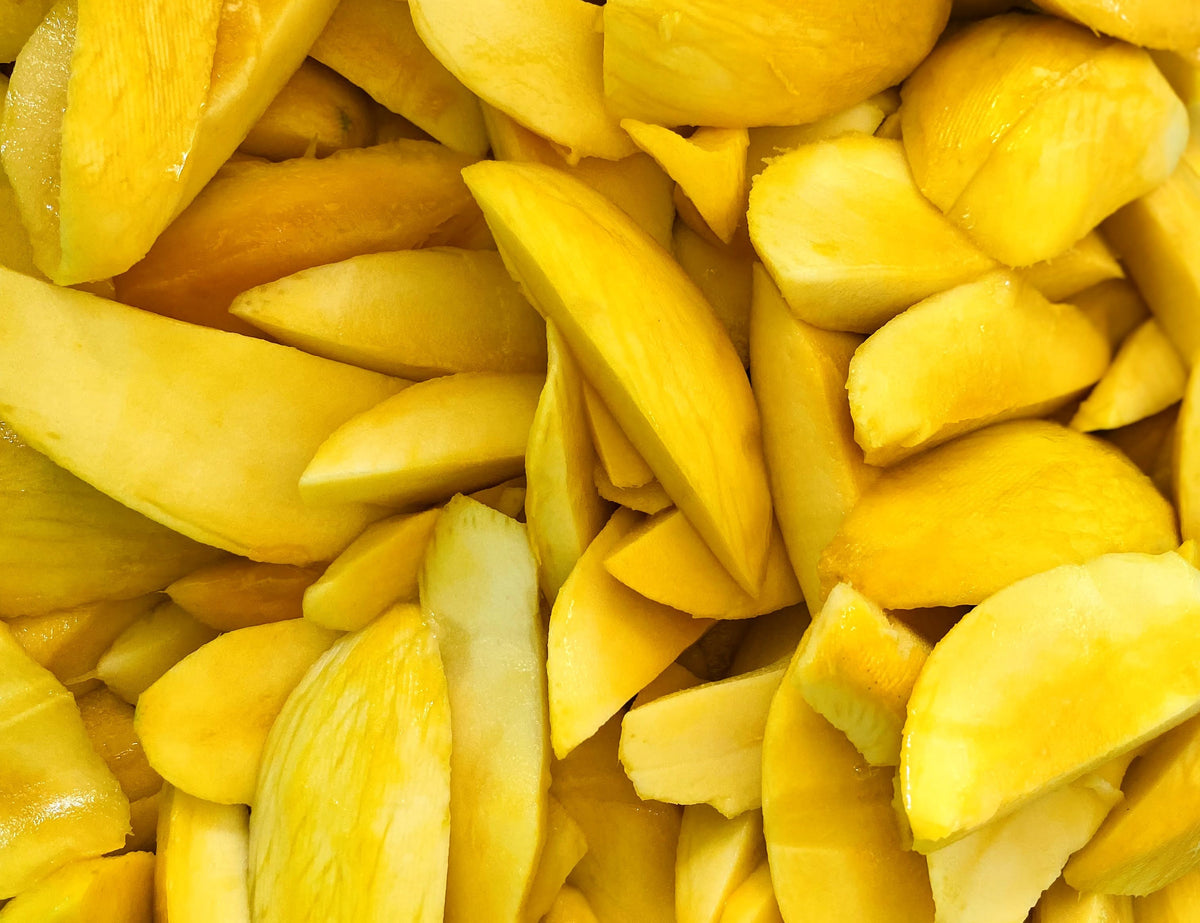
Peel and roughly chop the mangoes. Add them to a blender and process until completely smooth — with a fibreless Sindhri this takes about 20 seconds. For extra indulgence, stir in the condensed milk at this point. Taste and adjust: a truly ripe Sindhri or Anwar Ratol will need no added sugar whatsoever. Keep some mango back and dice it finely into cubes for the topping; a little textural contrast makes the finished glass more interesting. Refrigerate the pulp and cubes separately.
Step 4 — Make the Rose Milk
In a jug, whisk together the chilled milk, rose syrup, and sugar until the sugar dissolves. Taste — it should be pleasantly sweet and fragrant. Add the kewra water if using. Return the jug to the fridge to stay cold. Keeping everything ice-cold through assembly is important; a warm component will melt the ice cream almost immediately.
Step 5 — Assemble the Glasses
This is the moment that makes mango falooda so visually spectacular. Take each tall glass and build the layers in this order:
- Rose milk base: Pour about 3–4 tablespoons of the chilled rose milk into the bottom of the glass — enough to show a deep pink layer.
- Soaked basil seeds: Spoon a heaped tablespoon of soaked tukhmalanga over the milk. They will sink and settle, which is fine.
- Falooda sev: Add a generous nest of the cooked, chilled sev — about 2–3 tablespoons per glass. Use a fork or tongs to twirl it in loosely so it sits like a soft cushion.
- More rose milk: Pour another 3–4 tablespoons of rose milk down the side of the glass to partially fill it. This keeps the layers visible from outside the glass.
- Mango pulp: Spoon 3–4 tablespoons of the smooth mango pulp on top. Go slowly near the glass wall so you can see the golden-orange layer forming above the pink.
- Ice cream: Place one generous scoop of vanilla or mango ice cream right in the centre on top of the pulp.
- Final garnish: Scatter diced mango cubes around the ice cream, drizzle a little extra rose syrup for colour contrast, and finish with crushed pistachios and the saffron strands if using.
Serve immediately with a long spoon and a wide straw so your guest can dig all the way to the bottom, getting every layer in each bite.
Expert Tips for the Best Mango Falooda at Home
Temperature Is Everything
Falooda is a cold dessert and every component should be refrigerator-cold before assembly. If any single layer is warm, it melts the ice cream before the glass reaches the table and the layers bleed together. Prep your milk, pulp, sev, and seeds at least two hours ahead and keep them in the fridge.
Choose Fully Ripe Mangoes
A ripe mango yields gently to thumb pressure and smells fragrant near the stem. If you are buying from a market, look for Sindhri with fully golden skin and no green patches. The quality of your falooda is directly proportional to the quality of the mango — it is the dominant flavour throughout the glass. This is why we recommend ordering from our premium Pakistani mango gift boxes: every fruit in the box is harvested at peak ripeness and never treated with calcium carbide.
Do Not Overcook the Sev
Overcooked falooda sev turns mushy and loses its pleasant chew. Two to three minutes in boiling water is enough. When in doubt, taste one strand — it should feel like perfectly cooked thin pasta: tender but with a faint bite.
Layer Slowly for Visual Effect
Pour each liquid layer gently down the inside wall of the glass rather than straight down the middle. This preserves the distinct colour bands. If you have a squeeze bottle, even better — it gives you precise control when adding the mango pulp on top of the pink milk.
Saffron Upgrade
A pinch of saffron soaked in a teaspoon of warm milk for 10 minutes, then drizzled over the ice cream, elevates this from a roadside treat to a dinner-party dessert. Combined with White Chaunsa pulp, the pale gold colour palette is genuinely beautiful.
Variations and Flavour Riffs
Mango Falooda Without Rose Syrup
If rose syrup is not to your taste, replace it with plain chilled milk sweetened with condensed milk and a drop of vanilla extract. The result is a simpler, creamier falooda where the mango flavour stands front and centre without the floral competition. Some families also use khoya-thickened milk, which gives a consistency closer to a very thick milkshake.
Mango Lassi Falooda
Swap the plain milk for a thin mango lassi — blend equal parts yogurt and mango pulp with a pinch of cardamom and a little sugar. The slight yogurt tang cuts the sweetness and makes the falooda feel lighter. It pairs naturally with our mango lassi recipe if you want to make both in the same session from the same batch of mangoes.
Kesar (Saffron) Mango Falooda
Add a generous pinch of saffron to warm milk, let it steep for 20 minutes, then chill and use as your milk base. The saffron turns the milk a deep amber-gold. Combined with White Chaunsa mango pulp, the result is spectacularly coloured and tastes intensely floral and rich — the kind of falooda you would serve at a wedding.
Vegan Mango Falooda
Use full-fat coconut milk or oat milk in place of dairy, and coconut or oat-milk ice cream. The coconut milk version is particularly good with Sindhri as the coconut and mango flavours are natural partners. Skip the condensed milk or use a vegan coconut condensed milk.
Mango Falooda Cake
For a party centrepiece, layer the same falooda components in a wide glass trifle bowl: chilled sev on the base, soaked basil seeds, rose milk, a thick layer of mango pulp, and then a slab of vanilla sponge soaked in rose syrup, another mango layer, and whipped cream on top. Not traditional, but the flavour profile is identical and it serves twenty.
Make-Ahead and Storage
How Far Ahead Can You Prep?
Each individual component keeps well in the fridge:
- Soaked basil seeds: Refrigerate in their soaking liquid for up to 3 days. They will continue to swell slightly; drain before using.
- Cooked falooda sev: Refrigerate in a sealed container for up to 2 days. Rinse lightly with cold water before use if they have clumped.
- Mango pulp: Cover and refrigerate for up to 24 hours. Longer than that and fresh pulp begins to oxidise and darken. You can freeze it for up to 3 months — thaw overnight in the fridge.
- Rose milk: Keep chilled for up to 2 days in a sealed jug.
Can You Store Assembled Falooda?
Not really. Once the ice cream is added, serve within 10 minutes. If you must prepare partially assembled glasses, layer everything except the ice cream and mango cubes, cover with cling film, and keep in the fridge for up to an hour. Add the ice cream and final garnish just before serving.
Serving and Presentation Ideas
The tall, narrow glass is classic for a reason — it shows off all the layers at once. In Multan and Lahore, roadside falooda stalls use half-litre glasses that look almost impossibly tall. For a dinner-party presentation, consider:
- Wide-mouth mason jars — the thick walls exaggerate the layers
- Copper tumblers lined with a clear liner glass insert (purely visual)
- Coupe glasses with just two elegant layers for a more refined plating
Place the glasses on a small plate to catch any drips and add a sprig of fresh mint alongside the long spoon. The contrast of green mint against the orange mango and pink rose milk is striking in photographs.
Frequently Asked Questions
What is falooda sev and where can I buy it?
Falooda sev are very thin, translucent noodles made from corn starch or arrowroot starch. They are sold in any Pakistani or Indian grocery store, typically in 200 g packets labelled "falooda seviyan" or "falooda mix." In cities without a South Asian grocery, the closest substitute is thin rice vermicelli (rice noodles) or glass noodles made from mung bean starch — the texture is slightly different but acceptable. Online grocery platforms like Daraz in Pakistan carry multiple brands.
Can I use tinned or frozen mango pulp instead of fresh mangoes?
Yes, tinned pulp (Alphonso or Kesar) works as a convenient alternative out of season. However, nothing matches the flavour of a freshly blended ripe Sindhri or Chaunsa during the June–August Pakistani mango season. Tinned pulp is often sweetened and may contain preservatives, so taste before adding extra sugar. If you have access to fresh-season Pakistani mangoes, always use them — the falooda will taste completely different and noticeably better.
How do I make mango falooda without tukhmalanga (basil seeds)?
If you cannot find tukhmalanga, you can simply omit them — the falooda will still be delicious. Some people substitute chia seeds, which swell in a similar way, though the texture is slightly more gelatinous. Another option is small pieces of jelly (grass jelly or agar jelly cut into cubes), which adds a pleasant chew. Sabza seeds are increasingly available in organic and health-food stores if you want the authentic version.
Is mango falooda very sweet? Can I reduce the sugar?
Traditional Pakistani falooda is quite sweet — it is a dessert after all. But you have full control. If your mangoes are ripe Sindhri or Anwar Ratol, they bring plenty of natural sweetness and you may not need to add any sugar to the pulp at all. Reduce the rose syrup in the milk by a third if you prefer a less sweet version. Using a slightly tart mango variety like Langra also balances the sweetness beautifully.
What type of ice cream goes best with mango falooda?
Plain vanilla ice cream is the classic choice — its neutral creaminess does not compete with the mango layer. Mango ice cream doubles down on the fruit flavour if you want an intensely mango-forward result. Kulfi (traditional Pakistani frozen dessert) is an increasingly popular choice and holds its shape better in warm weather than regular ice cream. A roze (rose) kulfi is another beautiful combination with the rose syrup layer below.
How many calories are in mango falooda?
A full tall glass of mango falooda with ice cream is approximately 400–550 calories, depending on the amount of milk, sugar, rose syrup, and ice cream used. The largest variables are the ice cream portion and the quantity of rose syrup — both can be reduced to create a lighter version. The basil seeds and sev themselves contribute relatively little to the calorie count; it is the dairy and sugar that dominate. You can make a lighter version with low-fat milk, minimal rose syrup, and a single small scoop of ice cream at around 280–320 calories.
Order the Mangoes That Make This Recipe Exceptional
The single biggest upgrade you can make to this recipe is the quality of the mango. Our family has grown Sindhri, Anwar Ratol, and White Chaunsa in Multan for three generations — every box is hand-picked at peak ripeness, cold-chain handled, and delivered carbide-free. Thousands of customers across Pakistan, and mango lovers as far as Times Square, New York, know the difference a farm-fresh box makes. Shop our premium Pakistani mango gift boxes with free nationwide delivery and Cash on Delivery available across Pakistan. You can also reach us directly on WhatsApp at +92 300 9555810 — we are happy to recommend the right variety for your falooda based on what is at its peak right now.