
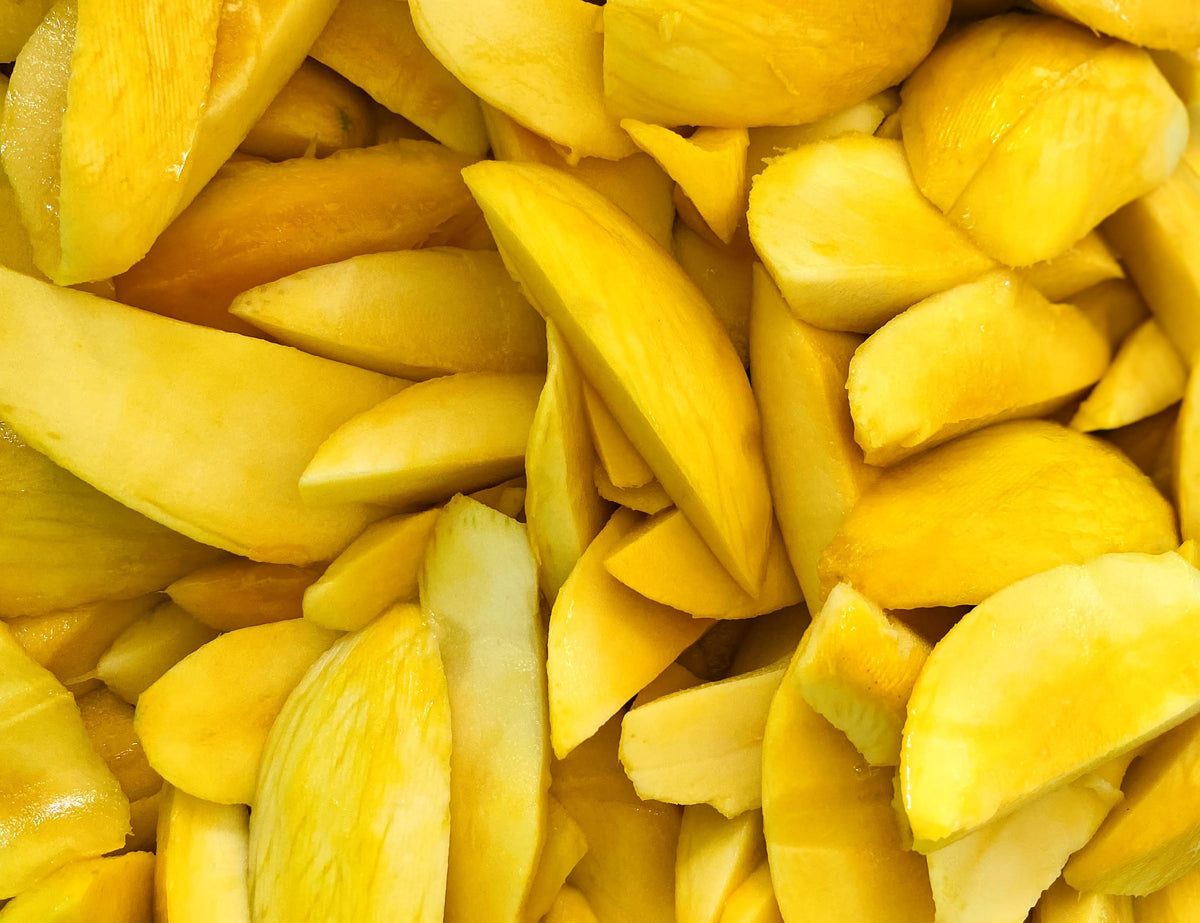
Mango Basundi Recipe with Fresh Pakistani Mangoes
The mango basundi recipe is one of the most requested summer desserts in South Asian kitchens — and for good reason. Basundi is a slow-cooked, reduced-milk sweet from the Indian subcontinent, traditionally perfumed with cardamom and saffron, and when you fold ripe Pakistani mango pulp into it, the result is something genuinely extraordinary: a silky, intensely flavoured mango milk dessert that sits somewhere between a thick rabri and a pourable kulfi. This guide walks you through how to make mango basundi at home, from choosing the right variety to storage tips, with everything you need to nail it on the first try.
The secret to great basundi with mango is using mangoes that are fully ripe, high in sugar, and low in fibre — so the pulp blends into the reduced milk seamlessly without any stringy texture. Pakistani varieties like Sindhri and White Chaunsa are ideal: Sindhri delivers a honey-forward sweetness with a smooth, almost custard-like flesh, while Chaunsa brings a floral fragrance that perfumes the entire pot. If you want to take this dessert to its natural peak, start with genuinely premium fruit — the shop premium Pakistani mango gift boxes carry farm-picked, carbide-free Sindhri and Chaunsa boxes sourced directly from Multan orchards.
Below you will find a complete, tested recipe with gram-level measurements, a full troubleshooting guide, four flavour variations, and a FAQ section covering the questions that come up most often. Let's start with the mise en place.
What Is Mango Basundi? (Origins and Why It Works)
Basundi is a classical Gujarati and Maharashtrian milk sweet — a cousin of North Indian rabri, though slightly thinner and more delicate. The word likely derives from the Sanskrit vasudha (nourishing earth), though cooks debate the etymology. The preparation involves simmering full-fat milk over medium heat for anywhere from 45 minutes to two hours, stirring frequently, until roughly one-third of the original volume remains. The reduced milk develops a characteristic golden hue from caramelised milk sugars, a faintly grainy texture from the cream solids that form and are folded back in, and a concentrated sweetness.
Adding fresh mango transforms basundi into a seasonal showpiece. The fruit pulp — stirred in after the milk has cooled slightly — cuts through the richness with bright acidity, extends the dessert's volume without diluting flavour, and introduces a vivid saffron-yellow colour that makes it look almost painted. A finished mango basundi is chilled until cold, then served in small glass bowls or kulhads. It travels well to dinner parties, holds in the fridge for three days, and can be frozen in kulfi moulds for a textural variation. If you enjoy this style of dessert, our mango kulfi recipe follows a similar philosophy with a firmer, more popsicle-like result.
Choosing the Right Mango Variety for This Recipe
Not every mango works equally well in basundi. The ideal variety is:
- Very ripe — under-ripe mango adds sourness that clashes with sweetened milk.
- Low-fibre — stringy fibres create an unpleasant mouthfeel in a smooth milk dessert.
- Intensely aromatic — the perfume of the mango needs to hold its own against cardamom and saffron.
- High in soluble sugars — helps you reduce the added sugar in the milk base without losing sweetness.
Sindhri (June harvest)
Sindhri is the premier choice. The flesh is deep yellow, virtually fibre-free, with a honey-and-peach sweetness and Brix readings typically in the 18–22 range. It blends into a completely smooth pulp without any straining required. Basundi made with Sindhri is the most approachable version — familiar, crowd-pleasing, and rich without being cloying.
White Chaunsa / Nawabpuri Chaunsa (August harvest)
Chaunsa, particularly the Nawabpuri and Mosami sub-types, carries an extraordinary floral top note — hints of rose, honey, and melon — that makes it the connoisseur's choice for this dessert. The flesh is paler but equally smooth. Basundi made with Chaunsa is more fragrant and slightly less sweet, which some prefer. If you want to try this version, the White Chaunsa premium box is available in August from the same Multan orchards.
Langra and Anwar Ratol
Langra has a distinctive turpentine-edge that can polarise opinions in a dessert context — use it if you love that flavour. Anwar Ratol is highly aromatic but small, so you will need more fruit by count. Both work, but Sindhri and Chaunsa remain the benchmark.
| Variety | Season | Sweetness | Fibre | Basundi Suitability |
|---|---|---|---|---|
| Sindhri | June | Very high | Very low | Excellent (top pick) |
| White Chaunsa | August | High | Very low | Excellent (fragrant) |
| Langra | July | High | Low | Good (distinctive flavour) |
| Anwar Ratol | July | Very high | Very low | Good (use more fruit) |
| Generic supermarket mango | Year-round | Variable | Medium | Acceptable (strain the pulp) |
Ingredients for Mango Basundi (Serves 6)
All measurements are tested for a batch that serves six people in 120–150 ml portions — a reasonable amount for a rich, after-dinner dessert.
For the basundi base
- 2 litres full-fat whole milk (buffalo milk gives the richest result; cow milk works perfectly well)
- 100 g caster sugar (adjust after adding mango — ripe Sindhri may need only 75 g)
- 8–10 green cardamom pods, lightly crushed, seeds removed and ground to a fine powder
- 20 saffron strands, bloomed in 2 tablespoons warm milk for 10 minutes
- 1 tablespoon rose water (optional, adds a classical Mughal note)
- 2 tablespoons slivered pistachios, for garnish
- 2 tablespoons slivered blanched almonds, for garnish
For the mango pulp
- 3 large ripe Sindhri or Chaunsa mangoes (approximately 600–700 g peeled flesh), or equivalent from a 5 kg premium box
- 1 teaspoon fresh lime juice (brightens the pulp and prevents oxidation)
Equipment
- Heavy-bottomed wide saucepan (at least 4-litre capacity — milk froths up)
- Wooden spoon or flat silicone spatula
- Blender or immersion blender
- Fine-mesh strainer (optional, for extra-smooth pulp)
- Serving bowls, chilled
Step-by-Step Mango Basundi Recipe
Step 1 — Bloom the saffron (5 minutes)
Warm 2 tablespoons of milk until just hot (not simmering). Add the saffron strands. Stir once and leave to steep for at least 10 minutes. The milk will turn a deep amber-gold and smell intensely floral. This blooming step is not optional — saffron added directly to cold milk will not release its crocin compounds efficiently, and you will lose most of the colour and flavour.
Step 2 — Reduce the milk (45–60 minutes)
Pour the 2 litres of milk into your heavy saucepan over medium-high heat. Bring to a boil, stirring continuously to prevent a skin from sticking to the bottom. Once boiling, reduce the heat to medium-low and maintain a steady, active simmer — you want small bubbles breaking the surface, not a vigorous rolling boil that scorches the base.
Stir every 2–3 minutes, running the spatula across the bottom and sides of the pan. As the milk reduces, a creamy layer (malai) will form on the surface and around the sides of the pan. Do not discard this. Stir it back into the milk each time — these cream solids are what give basundi its characteristic slightly grainy, luxurious texture.
After 45–55 minutes the milk should have reduced to roughly 650–700 ml — about one-third of the original volume. It will have turned slightly beige and will coat the back of a spoon thickly. This is your basundi base.
Step 3 — Sweeten and spice
Add the caster sugar to the hot reduced milk and stir for 2 minutes until fully dissolved. Add the ground cardamom and the bloomed saffron (including the staining milk). Stir well. If using rose water, add it now — just one tablespoon, off the heat, so the volatile aromatics don't cook off. Taste: the basundi should be pleasantly sweet, intensely milky, fragrant with cardamom, and slightly salty from the natural milk minerals. Adjust sugar if needed.
Step 4 — Cool the basundi base
This step is critical and often skipped in a hurry — with poor results. Allow the basundi to cool to room temperature (approximately 40–45 minutes), then chill in the refrigerator until the base is cold — between 5°C and 10°C. Adding mango pulp to hot milk causes the fruit's volatile fragrance compounds to evaporate immediately, and can also cause the basundi to turn slightly bitter if the mango is very sweet. Cold basundi base preserves every note of the fresh fruit.
Step 5 — Prepare the mango pulp
While the basundi chills, prepare your mangoes. Peel and cube the flesh, discarding the skin and stone. Blend in a jug blender or with an immersion blender until completely smooth. Add 1 teaspoon of lime juice and blend again for 20 seconds — the lime lifts the colour and adds a brightness that stops the mango from tasting flat.
For Sindhri, no straining is needed — the pulp is naturally smooth. For Langra, pass through a fine-mesh strainer to remove any fibres. You should have approximately 500–550 ml of thick, vividly coloured pulp.
Step 6 — Combine and adjust
Remove the cold basundi base from the refrigerator. Pour the mango pulp into the basundi in a slow, steady stream, whisking gently as you go. Taste immediately. If the mango is very ripe (Sindhri at peak season can be extremely sweet), you may want to reduce the total sugar you added in Step 3 — this is why it pays to taste the mangoes before committing to the full 100 g. The final mixture should be just sweet enough that it doesn't need more sugar, deeply flavoured with both milk and mango, and smooth enough to pour.
For a richer, thicker texture: fold in 100 ml of chilled fresh cream at this point. For a lighter version: skip the cream and thin the mixture with up to 50 ml of cold whole milk if the consistency feels too thick.
Step 7 — Chill, garnish, and serve
Pour the mango basundi into chilled serving bowls or glasses. Refrigerate for at least 2 hours (overnight is better — the flavours knit together and the texture firms up slightly). Just before serving, scatter slivered pistachios and almonds on top. A few thin mango slices on the rim make a beautiful presentation. Serve cold.
Tips for Perfect Mango Basundi Every Time
- Use the widest pan you own. A wider surface area means faster evaporation and a shorter cooking time — important when you are stirring by hand for 45+ minutes.
- Don't rush the reduction. Cooking on high heat to save time will scorch the bottom and introduce a bitter, burnt-milk flavour that cannot be fixed.
- Buffalo milk vs cow milk. Buffalo milk has higher fat (roughly 7–8% vs 3.5% for cow milk) and produces a thicker, richer basundi with deeper colour. If you can source it, use it. Otherwise, full-fat cow milk works beautifully.
- Cold base is non-negotiable. Patience here is the single biggest determinant of how fresh and vibrant the mango flavour is in the finished dessert.
- Taste your mangoes first. Two Sindhri from the same box can vary in sweetness depending on where they sat in the crate. Adjust your added sugar after tasting both the mangoes and the basundi base together.
- Make it the day before. Mango basundi genuinely improves overnight. The saffron deepens, the cardamom mellows, and the mango and milk flavours fully integrate.
Four Flavour Variations Worth Trying
1. Mango Basundi with Condensed Milk (Quick Version)
If you want a faster result, reduce 1 litre of whole milk to roughly 400 ml (about 25 minutes), then stir in one 400 g tin of sweetened condensed milk instead of adding sugar separately. The condensed milk also contributes more cream solids, yielding a slightly richer texture. Reduce or eliminate the added caster sugar entirely — condensed milk is already very sweet. This version takes about 35 minutes total vs 60 minutes for the classic approach.
2. Mango Basundi with Cardamom and Kewra
Substitute rose water with 1 teaspoon of kewra (screwpine) essence. Kewra has a more assertive, almost savoury floral quality that pairs especially well with White Chaunsa's fragrance profile. Use half a teaspoon if you are unfamiliar with kewra — it is potent.
3. Frozen Mango Basundi (Basundi Kulfi)
Pour the finished mango basundi into kulfi moulds or ice-cream containers and freeze for 6–8 hours. The resulting frozen dessert sits between basundi and kulfi in character — slightly icier than kulfi, more concentrated than ice cream. Unmould and serve with a pinch of chaat masala for a surprising savoury counterpoint.
4. Layered Mango Basundi Parfait
For a dinner-party plating: alternate layers of plain reduced basundi (no mango) and mango basundi in tall glasses, finishing with a mango layer on top. Add a thin disc of chikki (brittle nut toffee) standing upright in the top layer for texture contrast. This is visually striking and showcases both components separately.
How to Store Mango Basundi
Refrigerator: Transfer to an airtight container. Mango basundi keeps well for up to 3 days at 4°C. The flavour peaks on day two. Stir gently before serving on day three as some natural separation can occur.
Freezer: Pour into freezer-safe containers with a tight lid. Freeze for up to one month. Thaw overnight in the refrigerator and stir vigorously before serving. Note that the texture will be slightly grainier after freezing — this is normal for a milk-based preparation and does not indicate spoilage. Adding 50 ml of fresh cream after thawing and whisking well restores much of the original silkiness.
Do not refreeze after thawing. Repeated freeze-thaw cycles cause the milk proteins to separate permanently and the mango flavour to taste flat.
A note on food safety: Because this dessert is dairy-based with fresh fruit, it must be kept refrigerated at all times. Do not leave it at room temperature for more than 2 hours, particularly in warm climates where ambient temperatures exceed 25°C.
Serving Suggestions and Pairings
Mango basundi is a complete dessert on its own, but it works well in a larger spread:
- Serve after a heavy biryani or karahi meal — the cold, light-ish dairy dessert acts as a palate cleanser.
- Pair with crisp, thin papadums on the side for a textural contrast (an old Gujarati custom).
- A small scoop of malai kulfi alongside the basundi creates a hot-and-cold dramatic serve if you flash-chill the kulfi just before plating.
- For a breakfast-style presentation, serve warm basundi (before adding mango) with fresh Sindhri mango slices arranged around the bowl — the contrast of hot milk and cold fruit is excellent.
- Garnish variations: edible silver leaf (vark), dried rose petals, crushed freeze-dried raspberry, finely chopped medjool dates, or toasted coconut flakes all work alongside the classic pistachio-almond combination.
Scaling the Recipe Up or Down
This recipe scales linearly. For 12 servings, double all quantities and use the largest, heaviest pan you own (a large handi or degchi is ideal). For 2–3 servings, halve the milk to 1 litre and expect roughly 30–35 minutes of reduction time. The ratio of mango pulp to basundi base (approximately 500 ml pulp to 650 ml base) should remain roughly equal for the best balance of flavours — go heavier on the mango if you prefer a more fruity, lighter dessert, or reduce it to a 1:2 ratio (pulp:base) for a more milky, traditional character.
Frequently Asked Questions
Can I use canned or packaged mango pulp instead of fresh mangoes?
Yes, canned Alphonso or Kesar pulp works as a substitute when fresh mangoes are not in season. Use approximately 400–500 ml per batch. The flavour will be good but slightly more one-dimensional — fresh Sindhri or Chaunsa at peak ripeness carries aromatic compounds that are largely lost in the canning process. If using canned pulp, reduce the added sugar by 20–25% as most commercial pulps are sweetened.
Why does my basundi taste bitter or burnt?
This is almost always caused by insufficient stirring during the reduction phase. Milk solids settle to the bottom of the pan and scorch quickly if left undisturbed. Use a heavy-bottomed pan, keep the heat at medium-low after the initial boil, and stir every 2–3 minutes running the spatula across the entire base of the pan. If you detect a slightly burnt smell early in the process, immediately transfer the milk to a clean pan — do not stir from the bottom — to stop the scorched flavour spreading.
How is mango basundi different from mango rabri?
The two are very similar and often used interchangeably. Technically, rabri is a North Indian preparation where the cream skin (malai) is layered against the sides of the pan as the milk reduces, then folded in at the end to create a distinctly layered, rougher texture. Basundi — a Gujarati-Maharashtrian preparation — is continuously stirred, yielding a smoother, more uniform consistency. Basundi is also typically thinner and more pourable. In practice, the terms are used loosely, and the underlying technique and result are nearly identical.
Is mango basundi suitable for people who are lactose intolerant?
Traditional mango basundi is made entirely from whole milk and is not suitable for lactose intolerance. However, a dairy-free version can be made by substituting full-fat canned coconut milk (use two 400 ml tins) and reducing it over medium heat until thickened. The flavour profile is significantly different — more tropical and less traditional — but it makes a delicious dessert in its own right. Oat milk reduces well too but lacks the fat to produce a suitably rich result.
Can I make mango basundi in advance for a party?
Mango basundi is an ideal make-ahead dessert. Prepare the basundi base up to two days in advance and keep it refrigerated. Prepare and refrigerate the mango pulp separately. Combine them 4–6 hours before the event so the flavours have time to integrate but the mango fragrance remains vivid. This approach also lets you adjust the sweetness and mango-to-milk ratio right before guests arrive. Garnish with nuts at the point of serving only — pre-applied nuts soften and lose their crunch in the liquid dessert.
Which Pakistani mango variety gives the best colour in basundi?
Sindhri produces the most vivid, deep golden-yellow colour — almost identical to the hue of saffron itself — which means the basundi looks spectacular without needing artificial colouring. Chaunsa pulp is slightly paler but compensates with extraordinary fragrance. If you want maximum visual impact, Sindhri is your variety. Adding the bloomed saffron intensifies the colour further regardless of which mango you choose. Both Sindhri and Chaunsa are available by the season in premium 5 kg gift boxes from family orchards in Multan.
Ready to make this? The dessert is only as good as the mangoes you start with. Order farm-picked, carbide-free Sindhri or White Chaunsa from our premium Pakistani mango gift boxes — free delivery nationwide across Pakistan, Cash on Delivery available, and worldwide shipping for the diaspora. Questions or custom orders: WhatsApp +92 300 9555810.