
Eggless Mango Cake Recipe (Fresh Pakistani Mango)
This eggless mango cake recipe delivers a pillowy, fragrant sponge that tastes like biting into a perfectly ripe mango — no eggs required, no compromise on texture. Whether you follow a vegetarian diet, have an egg allergy in the family, or simply ran out of eggs on a summer afternoon, this recipe has you covered. With fresh Pakistani mango pulp folded straight into the batter, the cake turns a gorgeous golden-yellow and fills your kitchen with that unmistakable sweet, floral scent that only real mangoes can produce.
The secret to a truly outstanding result is the mango itself. Waterlogged or under-ripe fruit gives you a pale, barely-there flavour. What you want is a deeply aromatic, honey-sweet variety at peak season — Sindhri in June, White Chaunsa in August, or Anwar Ratol in mid-July. Using a premium Pakistani mango gift box from our family orchard in Multan means your pulp is already at the right sugar and acid balance, so you can skip the guesswork and go straight to baking.
Below you will find the complete tested recipe: ingredient weights, the exact method, tips for a high, even rise, flavour variations, storage guidance, and answers to the questions bakers ask most. This is the mango sponge cake without eggs that actually works — reliably, every time.
Why This Eggless Mango Cake Works
Eggs perform three jobs in a conventional sponge: they bind, they add moisture, and — beaten with air — they help the cake rise. Remove them without a strategy and you get a dense, gummy crumb. This recipe replaces each function deliberately:
- Binding: A combination of thick mango puree and Greek yoghurt (or hung curd) provides the same cohesive, slightly elastic structure that egg proteins create during baking.
- Leavening: A measured double-action of baking powder and a small amount of baking soda reacts with the natural acidity of the yoghurt, producing consistent lift through the entire bake.
- Moisture and fat: Neutral oil (sunflower or refined coconut) distributes evenly through the batter without clumping the way cold butter can, giving you a moist, tender crumb that stays soft for two days at room temperature.
The result is a mango cake without eggs that bakes flat on top (easy to layer), slices cleanly, and tastes intensely of mango rather than vanilla-with-a-hint-of-fruit. It is the backbone for a full celebration cake or lovely enough to serve plain with afternoon chai.
Ingredients
For the Cake Layers (Two 8-inch rounds or one 9×13-inch sheet)
| Ingredient | Metric | Notes |
|---|---|---|
| All-purpose flour (maida) | 280 g (2¼ cups) | Sifted |
| Caster sugar | 180 g (¾ cup + 2 tbsp) | Fine sugar dissolves faster; adjust to mango sweetness |
| Fresh mango puree | 240 g (1 cup) | Sindhri, Chaunsa, or Anwar Ratol; see prep notes |
| Full-fat Greek yoghurt or hung curd | 120 g (½ cup) | Room temperature |
| Neutral oil | 120 ml (½ cup) | Sunflower, canola, or refined coconut |
| Warm milk (or oat milk) | 60 ml (¼ cup) | Adjust consistency if needed |
| Baking powder | 2 tsp | Fresh; test if uncertain |
| Baking soda | ½ tsp | Reacts with yoghurt acidity |
| Salt | ¼ tsp | Enhances all flavours |
| Cardamom powder (elaichi) | ¼ tsp | Optional; lifts the floral mango note |
| Vanilla extract | 1 tsp | Pure, not imitation |
For the Mango Cream Frosting
- 400 ml heavy whipping cream, well chilled
- 3–4 tbsp icing (powdered) sugar
- 80 g (⅓ cup) fresh mango puree, reduced and cooled
- Fresh mango slices for topping
Preparing Your Mango Puree
The quality of the puree is the single biggest variable in a fresh mango cake. Follow these steps for a puree that is smooth, intensely flavoured, and the right consistency:
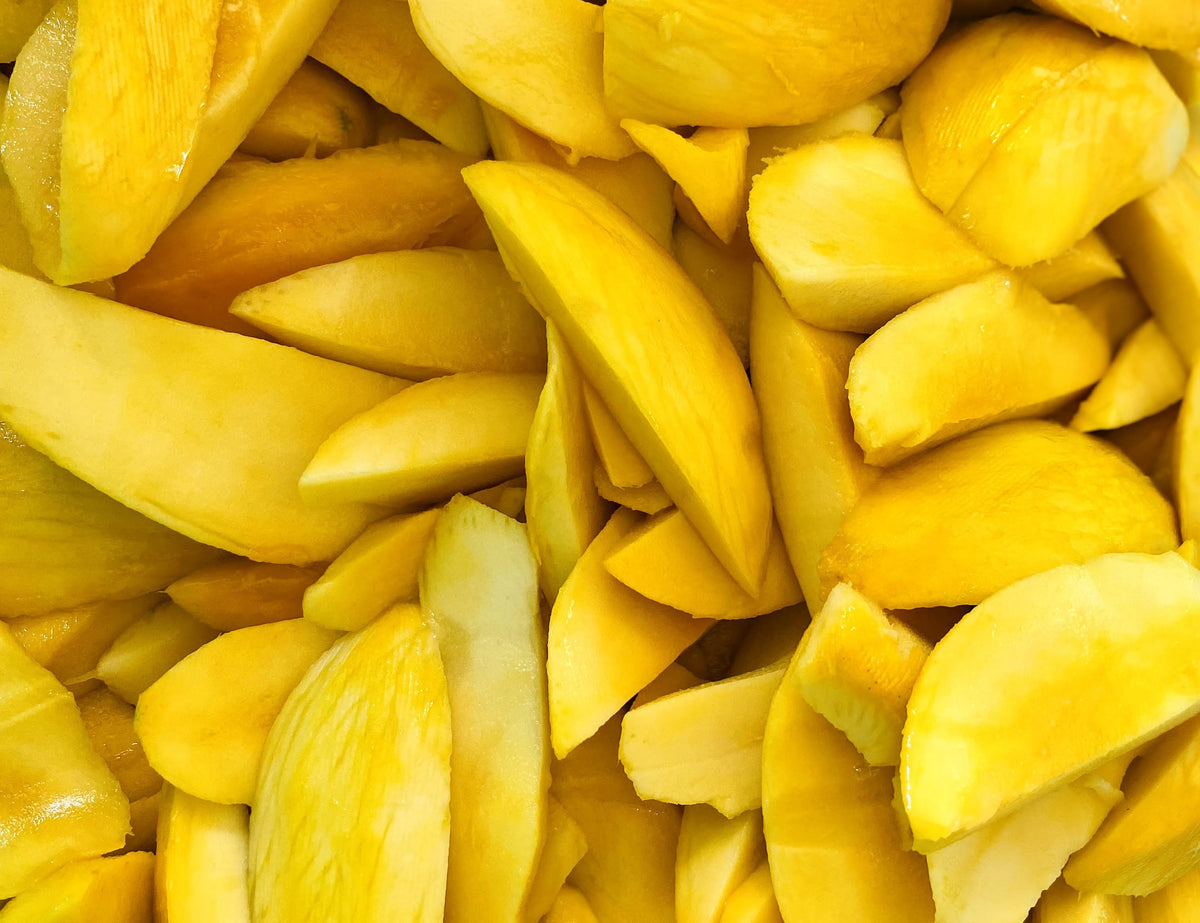
- Choose peak-ripe fruit. Press the shoulder of the mango — it should yield like a ripe avocado, not feel mushy. The skin should emit a sweet fragrance even before you cut it. Varieties with low fibre — Sindhri and White Chaunsa especially — blend into a silk-smooth puree with no fibrous threads to strain out.
- Peel and cube. Slice the flesh away from the stone in thick panels, then cube. If using our White Chaunsa premium box, the fruit is already at its natural peak-sugar point and needs no added sweetener in the puree.
- Blend to a smooth paste. Process in a jug blender or with a stick blender until completely smooth. You should have no visible fibre or lumps.
- Measure accurately. The recipe calls for 240 g (one level cup) for the batter and an additional 80 g for the frosting reduction. Weigh rather than volume-measure for consistent results.
- Reduce for the frosting. Pour the 80 g frosting portion into a small saucepan and simmer over low heat, stirring, until it thickens to a jam-like consistency (about 8–10 minutes). This concentrates the flavour and removes excess water that would otherwise make your whipped cream collapse. Cool completely before using.
Frozen mango pulp can substitute in a pinch — thaw fully and drain off any separated liquid — but fresh-season Pakistani mango gives noticeably brighter flavour and a deeper golden colour to the crumb.
Step-by-Step Method: Eggless Mango Cake Recipe
Step 1 — Preheat and Prepare Pans
Heat your oven to 175°C (350°F) conventional heat, or 160°C fan-forced. Grease two 8-inch round cake pans with a thin layer of oil, line the bases with parchment rounds, then dust the sides with flour and tap out the excess. This three-step pan preparation guarantees clean release even without eggs providing structural grip.
Step 2 — Mix Wet Ingredients
In a large bowl whisk together the mango puree, yoghurt, oil, warm milk, and vanilla extract until fully combined and smooth. The mixture will look slightly separated — that is normal; it emulsifies once the dry ingredients are added. If your puree is very cold from the refrigerator, bring it to room temperature first; cold puree can seize the batter.
Step 3 — Combine Dry Ingredients
In a separate bowl, sift together the flour, sugar, baking powder, baking soda, salt, and cardamom powder. Whisk for 20 seconds to distribute the leaveners evenly — an uneven distribution is the most common cause of domed or cracked tops in eggless sponges.
Step 4 — Fold to a Smooth Batter
Pour the wet mixture into the dry ingredients. Using a large balloon whisk or a flexible spatula, fold in wide, confident strokes — just until no dry flour streaks remain. Do not over-mix. Gluten development toughens the crumb, and without the tenderising fat of egg yolks, over-worked batter is especially noticeable in a mango cake without eggs. Stop as soon as the batter is uniform; a few tiny lumps are fine.
Step 5 — Divide and Bake
Divide the batter evenly between the two prepared pans (use kitchen scales for precision). Tap each pan twice on the counter to burst any large air pockets. Bake on the middle rack for 28–33 minutes. The cake is done when a wooden skewer inserted into the centre comes out clean, the top springs back when lightly pressed, and the edges have pulled fractionally away from the pan sides.
Step 6 — Cool Completely
Leave the cakes in the pans for 10 minutes, then turn out onto a wire rack and peel away the parchment. Allow them to cool to full room temperature — at least 45 minutes — before frosting. A warm sponge will melt the cream and cause it to slide. Patience here is non-negotiable.
Step 7 — Make the Mango Cream Frosting
In a chilled bowl with chilled beaters, whip the heavy cream and icing sugar to soft peaks. Add the cooled reduced mango puree and whip to firm, spreadable peaks. Work quickly and keep the bowl in the refrigerator between uses. This is a light, mousse-like frosting — not a buttercream — which suits the delicate mango sponge perfectly.
Step 8 — Assemble
Place the first cake layer on a serving plate. Spread a generous layer of mango cream, then arrange thin fresh mango slices across it. Set the second layer on top. Apply a light crumb coat of frosting all over (a thin, rough layer that seals crumbs), chill for 15 minutes, then apply the final smooth coat. Decorate with overlapping fresh mango slices and, if you like, a few dried rose petals or a dusting of freeze-dried mango powder.
Baker's Tips for a Perfect Rise
- Room-temperature wet ingredients matter. Cold yoghurt or cold puree hits warm leaveners and slows the reaction. Take everything out of the fridge 30 minutes before you start.
- Check your leaveners. Baking powder older than 6 months loses potency. Drop a teaspoon into a cup of boiling water — it should bubble vigorously within 5 seconds. If it fizzles weakly, replace it.
- Don't open the oven in the first 20 minutes. The carbon dioxide bubbles generated by the baking soda/yoghurt reaction are still expanding. An early door opening lets heat rush out, the bubbles collapse, and the centre sinks.
- If your top domes and cracks, your oven runs hot. Reduce by 10°C and use a baking strip (a damp towel wrapped around the pan) next time.
- Altitude adjustment: Above 1,500 m, reduce baking powder to 1½ tsp and increase milk by 1 tbsp. Pakistan's high-altitude cities (Murree, Nathiagali) are worth noting if you are baking during a summer escape.
Flavour Variations
Mango Coconut Sponge Cake Eggless
Substitute 60 ml of the oil with full-fat coconut milk and add 30 g of desiccated coconut to the dry ingredients. Fold toasted coconut flakes into the frosting for a tropical layer cake that pairs especially well with Sindhri mangoes, whose honeyed sweetness cuts beautifully against coconut's richness.
Mango and Pistachio
Replace 40 g of flour with finely ground pistachio meal. The pale green flecks in a golden sponge look stunning when sliced, and the nutty, slightly resinous flavour of pistachios is a classic pairing with White Chaunsa's delicate floral notes.
Mango Saffron Cake
Dissolve a generous pinch of saffron strands in the warm milk before mixing into the batter. The saffron deepens the yellow hue and adds a musky, aristocratic note that transforms this into a celebration cake worthy of an Eid table.
Vegan Version
Swap the Greek yoghurt for a thick, unsweetened coconut or soy yoghurt, and use full-fat oat milk or coconut milk in place of dairy milk. The rest of the recipe is already plant-based. The texture is marginally denser but still excellent — and the mango flavour comes through just as clearly.
Mango Loaf / Sheet Cake
Pour the full batter into a greased 9×5-inch loaf tin and bake at 170°C for 50–55 minutes. Or use a 9×13-inch sheet pan at 175°C for 22–25 minutes for a quick-frost party cake. Both formats bake reliably without the structural concern of layering.
Mango Variety Guide for Baking
Not all mangoes bake equally. Here is how the five main Pakistani varieties perform in this fresh mango cake recipe:
| Variety | Season | Fibre | Sweetness | Best Use in This Cake |
|---|---|---|---|---|
| Sindhri | June | Very low | High — 18–20 Brix | Perfect for batter puree; yields silk-smooth pulp, rich golden colour |
| Langra | July | Low | Medium-high, tangy edge | Good in batter; slight tang balances sweet frosting |
| Anwar Ratol | July | Very low | Intensely sweet, fragrant | Outstanding flavour; small yield per fruit, so budget 4–5 for a batch |
| White Chaunsa (Nawabpuri) | August | Near-zero | Mild, floral, honey-like | Exceptional in frosting; pale colour preserved in cream |
| White Chaunsa (Mosami) | August | Near-zero | Sweet, slightly buttery | Excellent in both batter and frosting; long shelf post-harvest |
If you want to bake this mango sponge cake eggless at its absolute best and your local market has poor-quality or carbide-ripened fruit, consider ordering a premium Pakistani mango gift box direct from the farm. Carbide-ripened mangoes — a persistent problem in commercial supply chains — have compromised cell structure and leak excess water into the batter, preventing a proper rise and washing out flavour. Farm-ripened, cold-chain-packed fruit behaves predictably in baking because the starches have converted naturally to sugars at the correct rate.
Serving Suggestions
This cake is versatile enough to move between casual and formal settings:
- Afternoon chai table: Serve plain sponge slices, no frosting, alongside cardamom tea. The warm spice in the cake and in the chai echo each other.
- Birthday or Eid celebration: Two-layer frosted cake decorated with overlapping mango fans and a few edible silver leaf (warq) sheets for visual drama.
- Dessert platter: Cut into fingers and serve alongside mango kulfi for a contrast of warm cake and frozen kulfi — a crowd-stopper at summer gatherings.
- Trifle base: Tear leftover sponge into chunks, layer with mango cream and fresh mango cubes in a glass bowl, and refrigerate overnight. The cream soaks into the sponge and the whole thing sets into something you will make deliberately as soon as the mangoes arrive each season.
Storage and Make-Ahead
Unfrosted sponge layers
Wrap tightly in cling film or store in an airtight container at room temperature for up to 2 days, or refrigerate for up to 5 days. The cake actually improves slightly on day two as the mango flavour deepens. Freeze for up to 3 months, wrapped in two layers of cling film plus a foil layer; thaw overnight at room temperature still wrapped (condensation forms on the outside, not on the cake).
Frosted and assembled cake
Refrigerate uncovered for 30 minutes until the cream sets, then loosely cover and keep refrigerated. Best eaten within 2 days of assembly. Fresh mango slices on top weep juice after 24 hours in the refrigerator, so add topping decorations only a few hours before serving.
Puree
Freeze fresh mango puree in ice-cube trays, then transfer to a zip-lock bag. Each standard cube is approximately 30 g, so you can count out 8 cubes for the batter. This means you can bake this eggless mango cake in January if you froze Sindhri at peak season in June — the flavour is noticeably better than canned pulp.
Frequently Asked Questions
Can I use canned mango pulp instead of fresh mango?
Yes, commercially packed mango pulp (such as Alphonso or Kesar tins common in South Asian grocery stores) works in this recipe. Use the same 240 g weight. Check the tin for added sugar — if the pulp is pre-sweetened, reduce the caster sugar in the recipe by 20–30 g and taste the batter before baking. Fresh-season Pakistani varieties will always give a brighter, more aromatic result, but canned pulp is a reliable year-round substitute.
Why did my eggless mango cake sink in the middle?
A sunken centre usually has one of three causes: the oven door was opened before the 20-minute mark (collapsing still-expanding gas bubbles); the baking powder or soda was old and underpowered; or the batter was over-mixed after the wet and dry ingredients combined (developing excess gluten that pulls the crumb inward as it cools). Check your leaveners with the boiling-water test before every bake, fold gently, and resist opening the oven early.
Can I make this mango cake without eggs and without dairy?
Absolutely. Replace the Greek yoghurt with thick, unsweetened coconut yoghurt or soy yoghurt, swap the milk for oat milk or full-fat coconut milk, and use a dairy-free cream (coconut cream, whipped, works well) for the frosting. The texture is marginally denser but still produces a genuinely good mango sponge cake that is fully vegan.
Which mango variety gives the best flavour in baking?
For maximum flavour intensity in the batter, Sindhri (June) or Anwar Ratol (July) are the top choices — both are nearly fibre-free, deeply sweet, and produce a deeply golden puree. For a delicate, floral tone in the frosting or as a topping, White Chaunsa (August) is unmatched. All five varieties in our premium Pakistani mango boxes are farm-ripened, carbide-free, and hand-picked at peak sugar — the most important variable in a fresh mango cake recipe.
How do I prevent the mango cream frosting from going runny?
Three things keep whipped mango cream stable: first, reduce the puree on the stove until thick before adding it to the cream (this removes water); second, keep your bowl, beaters, and cream thoroughly chilled — even a slightly warm bowl will prevent the cream from whipping to firm peaks; third, do not over-whip the cream itself before adding the mango, as cream broken to grainy stage cannot recover. If the frosted cake will sit out for more than 30 minutes in warm weather, fold 1 tsp of gelatine (bloomed and melted) or 2 tsp of cream-cheese stabiliser into the frosting.
How long does this eggless mango cake stay fresh?
The unfrosted sponge keeps well at room temperature for 2 days, or up to 5 days refrigerated. Once frosted with whipped mango cream, the assembled cake is best within 2 days. The sponge layers freeze excellently for up to 3 months — a useful strategy when mangoes are in season: bake a double batch, freeze the extra layers, and you can assemble a celebration-quality fresh mango cake in mid-winter with nothing more than a tub of cream and a bag of frozen puree.
Ready to bake the finest mango cake of your life? It starts with fruit that is actually worth celebrating. Order your premium Pakistani mango gift box — Sindhri, Langra, Anwar Ratol, or White Chaunsa — with free nationwide delivery across Pakistan and worldwide shipping, Cash on Delivery available. Or message us on WhatsApp at +92 300 9555810 to ask which variety is at its peak right now. When the mangoes are this good, the cake bakes itself.