
Mango Tart Recipe with Fresh Pakistani Mangoes
A great mango tart recipe begins and ends with the fruit. When the pastry cream is cool, the shell is golden, and you slide thick slices of ripe Sindhri or White Chaunsa across the top, something clicks — the buttery crunch, the silky custard, the perfume of fresh Pakistani mango all at once. This recipe walks you through every step: the shortcrust shell, the vanilla pastry cream, and the glaze that makes it shine like stained glass. It is an easy mango tart in the sense that none of the stages is technically demanding, yet the result looks and tastes genuinely impressive.
Use the ripest, most fragrant mangoes you can find. That single decision matters more than any pastry technique in this guide. Sindhri, with its honey-sweet flesh and almost custard-like texture, is the classic choice for a fresh mango tart. White Chaunsa (Nawabpuri or Mosami) brings a floral top note and a clean sweetness that makes every bite feel light. Either variety, hand-picked at peak ripeness from a family orchard and cold-chained to your door, transforms a competent tart into something people request every summer. If you want that quality, our shop of premium Pakistani mango gift boxes carries both varieties in 5 kg boxes during their respective seasons.
Below you will find the full recipe with weights, a visual timeline, tips for working ahead, flavour variations, and a troubleshooting section — everything you need to make this mango fruit tart with confidence the very first time.
What Makes a Mango Tart Different from Other Fruit Tarts
A classic French fruit tart (tarte aux fruits) uses a firm shortcrust shell — pate sablee — filled with a stabilised vanilla pastry cream and topped with glazed fruit. The same logic applies here, with one important difference: Pakistani mango flesh is unusually soft and juicy. That means you need a shell sturdy enough not to turn soggy, a pastry cream set just firm enough to hold clean slices, and a neutral glaze (not an overpowering apricot jam) that enhances rather than competes.
The other difference is timing. A mango tart is a fresh mango tart — meaning the fruit is never baked. You assemble it cold, glaze it, and serve within a few hours. Baking would cook away the volatile aromatics that make Sindhri smell like a summer afternoon in Multan.
Key components at a glance
| Component | Purpose | Make-ahead? |
|---|---|---|
| Pate sablee shell | Crisp, buttery base; structural | Yes — up to 3 days baked, airtight |
| Vanilla pastry cream | Silky, stable filling; contrasts mango | Yes — up to 2 days, refrigerated, covered |
| Fresh mango slices | Flavour, colour, texture | Slice on day of; do not pre-slice overnight |
| Neutral glaze | Shine, moisture barrier, freshness | Apply just before serving |
Mango Tart Recipe: Ingredients
Quantities below make one 23 cm (9-inch) round tart, serving 8–10. All weights are grams; volume measures given for convenience.
For the pate sablee shell
- 200 g (1 cup + 5 tsp) plain flour, plus extra for dusting
- 100 g (7 tbsp) cold unsalted butter, cubed
- 40 g (3 tbsp) icing sugar, sifted
- 1 large egg yolk
- 2–3 tbsp ice-cold water
- Pinch of fine salt
- ½ tsp vanilla extract (optional but recommended)
For the vanilla pastry cream
- 500 ml (2 cups) full-fat milk
- 4 large egg yolks
- 100 g (½ cup) caster sugar
- 40 g (5 tbsp) cornflour (cornstarch)
- 1 tsp pure vanilla extract or seeds from ½ vanilla pod
- 30 g (2 tbsp) cold unsalted butter, cubed
For the topping
- 2–3 large ripe Sindhri or White Chaunsa mangoes (about 700 g flesh once peeled and stoned)
- 3 tbsp neutral mango or apricot glaze (see method below)
Optional garnishes
- Fresh mint leaves
- Toasted coconut flakes
- A light dusting of cardamom powder
- Edible gold leaf for celebration presentation
Step-by-Step Method
Step 1 — Make the pastry shell (20 min + 1 hr chilling)
- Place flour, icing sugar and salt in a large bowl (or food processor). Add cold butter cubes and rub in with your fingertips — or pulse — until the mixture looks like coarse breadcrumbs. Work quickly; warm hands melt butter and make the pastry tough.
- Add the egg yolk and vanilla extract. Mix briefly, then add ice water one tablespoon at a time, pressing the dough together until it just clumps. Stop adding water the moment it holds.
- Flatten into a disc, wrap in cling film and refrigerate for at least 1 hour (overnight is fine).
- Preheat the oven to 180°C (160°C fan / 350°F). Roll the chilled dough on a lightly floured surface to about 3 mm thickness. Drape it into a 23 cm loose-bottomed tart tin, pressing gently into the edges. Trim the overhang flush with the rim.
- Prick the base all over with a fork. Chill for another 15 minutes — this prevents shrinkage.
- Line with baking paper and fill with baking beans or uncooked rice. Blind-bake for 15 minutes, then remove the paper and beans and bake a further 8–10 minutes until the base is golden and completely dry. Cool in the tin on a wire rack.
Step 2 — Make the vanilla pastry cream (15 min + 2 hr chilling)
- Heat the milk in a medium saucepan over medium heat until it just begins to steam and bubble at the edges. Do not boil.
- Meanwhile, whisk egg yolks, sugar and cornflour together in a heatproof bowl until thick and pale — about 90 seconds of vigorous whisking.
- Pour roughly one-third of the hot milk into the egg mixture, whisking constantly. This tempers the eggs. Pour the tempered mixture back into the remaining milk in the saucepan.
- Cook over medium heat, stirring continuously with a wooden spoon or heatproof spatula, until the cream thickens, bubbles, and has cooked out the raw starch taste — about 3–4 minutes after the first bubble appears.
- Remove from heat. Stir in vanilla and cold butter cubes until the butter melts and the cream is glossy.
- Pour into a clean bowl, press cling film directly onto the surface (this prevents a skin forming), and refrigerate until completely cold — at least 2 hours.
- When ready to use, whisk briefly to loosen. If it looks lumpy, push it through a sieve.
Step 3 — Prepare the mango topping
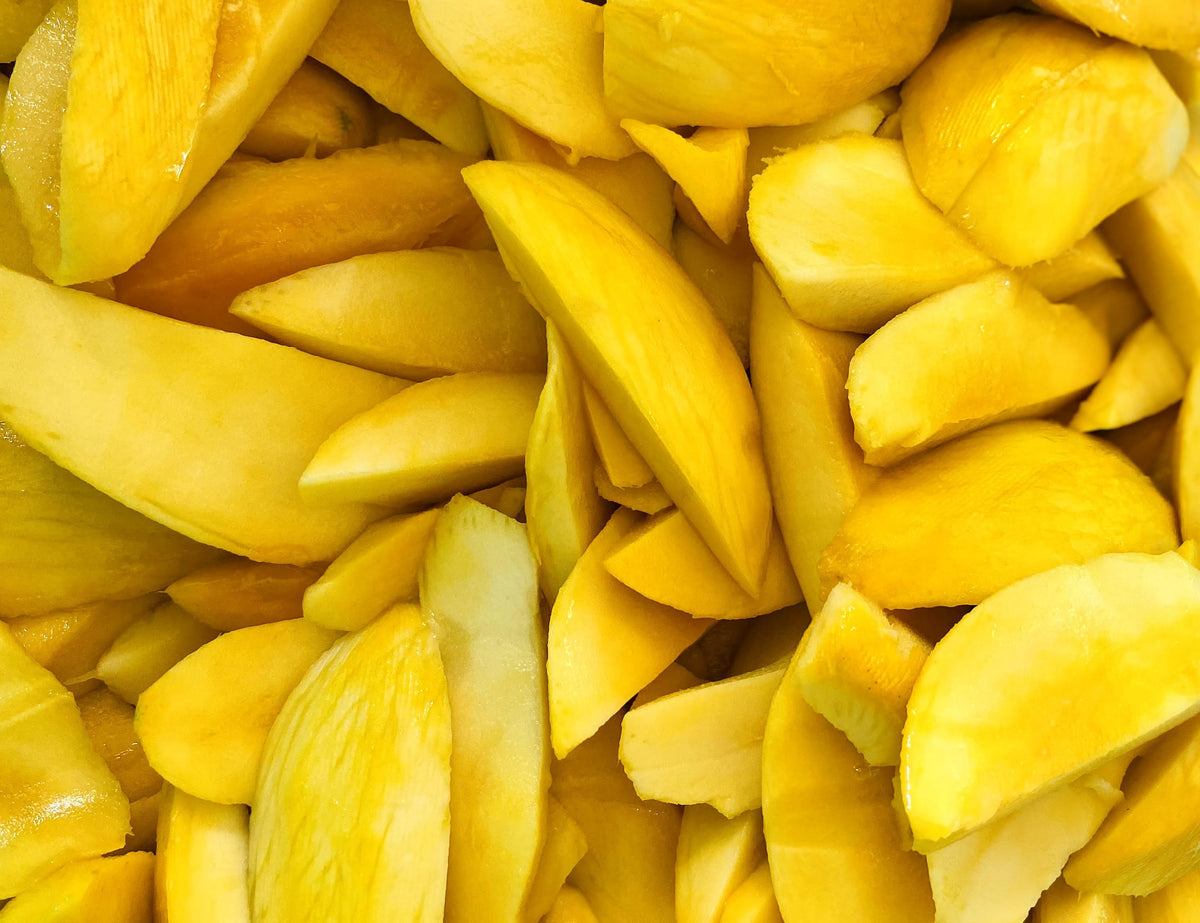
- Peel and stone your mangoes. For a Sindhri, stand it on its narrow end and slice down either side of the flat stone to get two "cheeks," then slice off the narrow sides. Peel each piece and slice into 5 mm thick strips.
- For White Chaunsa, the same method applies — the flesh is a touch softer, so use a sharp knife and work confidently rather than sawing.
- Pat the slices dry with kitchen paper. Excess juice will dilute the pastry cream and soften the shell prematurely.
Step 4 — Assemble the mango tart
- Spoon the cold pastry cream into the cooled tart shell. Spread it evenly with a palette knife, filling the shell to within 2 mm of the rim. The layer should be about 1.5 cm deep.
- Begin laying mango slices from the outer edge, overlapping each slice slightly like roof tiles or fish scales. Work in concentric circles toward the centre, or arrange them in fans for a more dramatic look.
- For a rosette centre, roll one thin slice into a tight coil and set it at the very middle.
- Brush the mango slices with glaze (see below) using a soft pastry brush. Use light strokes — you want a thin, even shine, not a wet coat.
- Refrigerate for at least 30 minutes before slicing. This sets the cream and makes clean cuts much easier.
Step 5 — Make a simple neutral glaze
Combine 3 tablespoons of mango jam (or apricot jam if mango is unavailable) with 1 tablespoon of water in a small saucepan. Heat until the jam melts and becomes pourable, then strain through a fine sieve to remove any fruit pieces. Use warm. A neutral nappage glaze (available in baking supply shops) also works beautifully and gives a clearer, more professional finish.
Which Mango Variety to Use — Sindhri vs White Chaunsa
Both Sindhri and White Chaunsa are exceptional in a mango fruit tart. The choice depends on your flavour preference and what is in season.
| Characteristic | Sindhri (June) | White Chaunsa — Nawabpuri/Mosami (August) |
|---|---|---|
| Flavour profile | Deep honey-sweet, butterscotch notes, very rich | Floral, light, clean sweetness with citrus top notes |
| Flesh texture | Thick, fleshy, holds shape well when sliced | Softer and juicier — needs careful handling |
| Colour | Deep golden-orange | Pale gold to cream — beautiful contrast with glaze |
| Best pairing in pastry cream | Vanilla, cardamom, coconut | Rosewater, lime zest, pistachio |
| Season | June | August |
Our White Chaunsa premium box is available from August — the Nawabpuri sub-variety in particular has an exceptionally clean flavour that works beautifully against the richness of a pastry cream tart. If you are baking in early summer, Sindhri is your mango. If you are baking in August, Chaunsa will not disappoint.
Pro Tips for a Perfect Easy Mango Tart Every Time
Cold ingredients, cold surfaces
Pastry becomes tough when butter melts prematurely. Work in a cool kitchen, keep butter refrigerated until the last moment, and chill the dough before rolling. If your kitchen is warm, chill the mixing bowl in the fridge for 10 minutes beforehand.
Blind-bake until completely dry
A pale, slightly underbaked shell will turn soggy within an hour of the pastry cream going in. Look for a deep golden colour all over the base — it should look a little darker than you think is right. The base has to be bone-dry because it will absorb moisture from both the pastry cream and the mango.
Press cling film directly onto pastry cream
Any exposed surface will form a skin as it cools, and that skin will cause lumps when you whisk it before use. Direct contact with cling film prevents this entirely.
Pat your mango dry
Mango from a ripe Sindhri releases a lot of juice once sliced. A few seconds patting each piece dry with kitchen paper is the most important step most home bakers skip. Wet fruit makes wet pastry cream, which makes a wet shell, which makes a sad tart.
Slice with a hot, dry knife
Dip your knife in hot water and wipe dry before each cut. The pastry cream compresses rather than crumbles, giving you the clean, photogenic slices that make this recipe worth showing off.
Do not assemble too far ahead
Assembled with glaze, the tart holds well for up to 6 hours in the refrigerator. Beyond that, the shell begins to soften noticeably. You can have the shell baked and the pastry cream made 2 days in advance — assembly takes only 10 minutes on the day.
Flavour Variations
Cardamom and pistachio mango tart
Add ½ tsp ground green cardamom to the pastry cream during cooking. Scatter 2 tablespoons of finely chopped roasted pistachios over the finished tart before glazing. This combination is inspired by Pakistani mithai and makes the tart feel deeply rooted in the origin of the mango itself.
Coconut pastry cream mango tart
Replace 150 ml of the milk with full-fat coconut milk. The pastry cream picks up a subtle coconut sweetness that plays beautifully against the tropical brightness of Sindhri. Scatter toasted coconut flakes as a garnish.
Lime and ginger mango fruit tart
Stir 1 tsp of finely grated lime zest and ¼ tsp of ground ginger into the finished pastry cream before chilling. These add a gentle sharpness that cuts through the richness and keeps the flavour lively.
Mini individual tarts
Use six 9 cm mini tart tins instead of one large tin. Reduce blind-bake time to 10 minutes (then 6–7 minutes without beans). Individual portions look stunning on a platter for guests and are easier to serve without the shell crumbling.
Rosewater mango tart with Chaunsa
Add ½ tsp of food-grade rosewater to the pastry cream at the same time as the vanilla. Use only White Chaunsa for the topping. Garnish with a few dried rose petals. This variation pairs perfectly with a cup of kahwa and is the one we reach for at Eid gatherings.
For more recipes that celebrate the depth of Pakistani mango flavour, try our mango kulfi recipe — it uses no ice cream machine and sets overnight in the freezer.
Storage and Make-Ahead Guide
Components separately
- Baked shell: room temperature in an airtight container for up to 3 days, or frozen for up to 1 month.
- Pastry cream: refrigerated, cling film pressed onto the surface, for up to 2 days. Do not freeze — it splits.
- Sliced mango: do not store overnight. Slice the day of assembly.
Assembled tart
Once glazed and assembled, refrigerate uncovered (a domed cake lid works well) for up to 6 hours. Beyond this, the glaze begins to weep and the shell softens. Do not freeze the assembled tart.
Leftover slices
Store cut slices in an airtight container in the refrigerator for up to 24 hours. The shell will soften further but the flavour remains excellent — think of it as a deliberate transition toward a soft, creamy dessert rather than a crisp tart.
Frequently Asked Questions
Can I use canned or frozen mango instead of fresh?
You can, but the result is noticeably less impressive. Canned mango is typically softer, more uniform in flavour, and releases far more liquid, which will soften the shell quickly. Frozen mango, once thawed, loses its structural integrity and the volatile aromatics that make a mango tart worth making. Fresh, ripe, in-season Pakistani mango — especially Sindhri or White Chaunsa — is genuinely irreplaceable here. If fresh is unavailable, drain canned mango thoroughly and pat it very dry before using.
How do I stop my tart shell from shrinking during blind baking?
Three things prevent shrinkage: resting the dough in the fridge after mixing, chilling it again for 15 minutes after lining the tin, and ensuring the dough is pressed firmly into the corners and up the sides without being stretched. Stretched dough springs back as it bakes. A heavy layer of baking beans also helps keep the sides upright during the first stage of blind baking.
My pastry cream has lumps — how do I fix it?
Lumps mean either the egg mixture was not whisked smooth before adding milk, or the cream was not stirred constantly during cooking and some of it set on the pan bottom before being stirred back in. To fix a lumpy pastry cream, push it through a fine sieve while it is still warm and whisk vigorously. Do not reheat and re-cook — it will over-thicken. If it is already cold and lumpy, whisk it hard (an electric whisk works) to break up the lumps before using.
Is there a dairy-free version of this mango tart?
Yes. Replace butter in the pastry with solid coconut oil (same weight, same method) and use full-fat oat milk or coconut milk in place of dairy milk in the pastry cream. Add an extra 5 g of cornflour to compensate for the lower protein content of plant milk. The shell is slightly more crumbly but perfectly usable; the pastry cream sets a little softer, so allow an extra hour of chilling before assembly.
What is the best way to cut a mango for tart decoration?
For neat overlapping rounds or fans, use the "cheek" method: slice down either side of the flat mango stone, then peel each cheek and cut crosswise into 5 mm strips. Work on a cutting board with a lip to catch the juice. A thin, sharp knife is essential — a bread knife or blunt chef's knife will crush rather than slice the flesh. For a flower effect, cut thin half-moon slices and curl them into a spiral from the outside in.
Can I make this mango tart recipe in advance for a party?
Yes — and it is actually designed for advance preparation. Bake the shell up to 3 days ahead and store airtight at room temperature. Make the pastry cream up to 2 days ahead and refrigerate. On the day of your event, slice the mango fresh, spread the pastry cream into the shell, arrange the mango, glaze, and refrigerate for 30 minutes to set. Total assembly time is about 15 minutes. The tart holds well glazed for up to 6 hours in the refrigerator, making it ideal for dinner parties, Eid gatherings, or any celebration where you want something that looks spectacular without last-minute stress.
Ready to make this recipe with the finest mangoes from Multan? Order from our premium Pakistani mango gift boxes — Sindhri available in June, White Chaunsa in August — with free nationwide delivery across Pakistan, Cash on Delivery, and worldwide shipping. Or reach us directly on WhatsApp at +92 300 9555810 to place your order.