
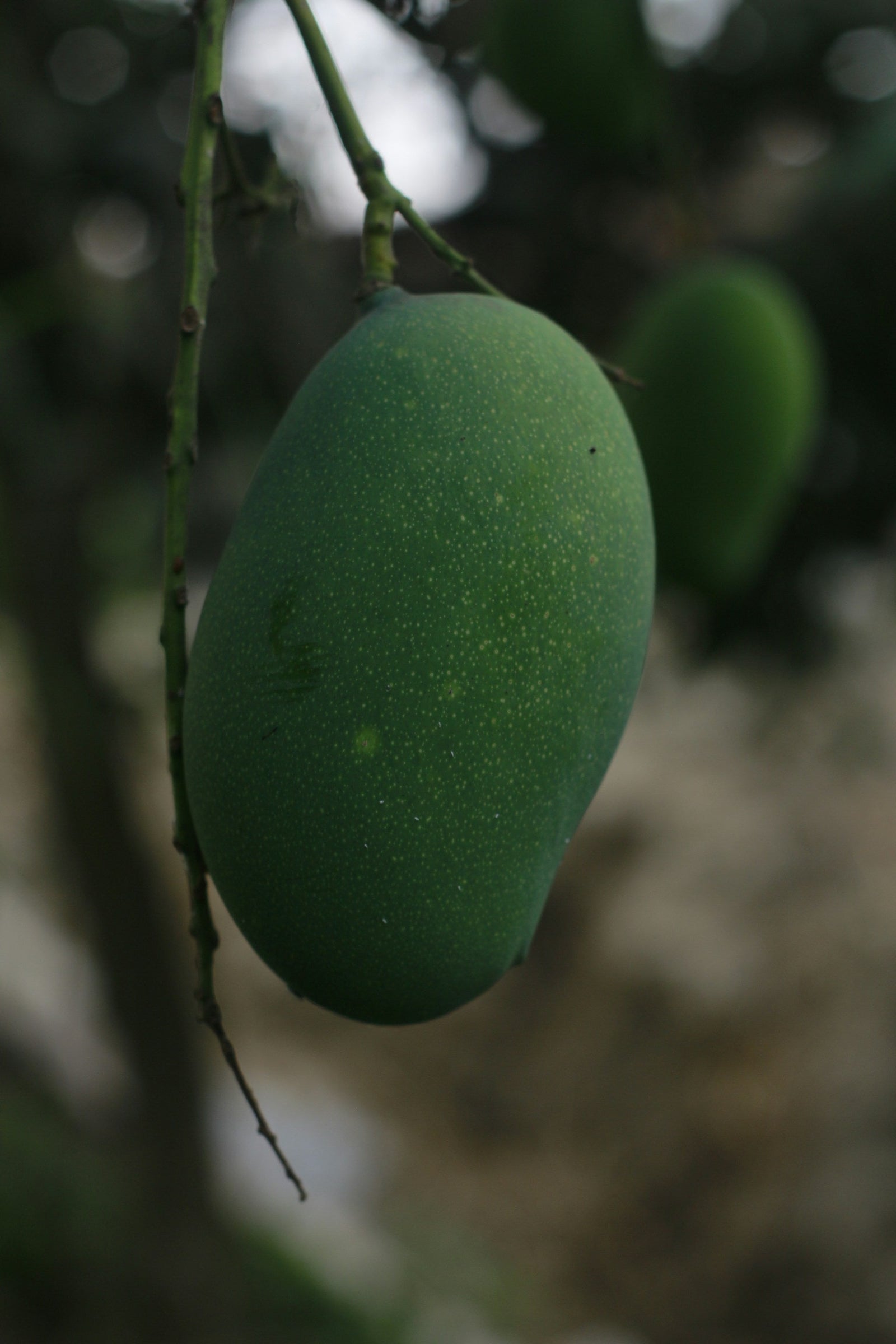
How to Tell If a Mango Is Ripe — 5 Tests That Actually Work
1. Smell at the stem — strong honey-floral fragrance = ripe. 2. Gentle squeeze — slight give like a peach = ripe. 3. Skin shows natural sugar spots — sign of high ripeness. 4. Slight softening near stem. 5. Heavier than you'd expect for size = juicy, ripe. Color alone is unreliable (Langra stays green when ripe).
The 5 reliable tests
1. The smell test (most reliable)
Hold the mango near your nose, especially at the stem end. A ripe mango will have a strong, sweet, honey-floral aroma. No smell = not ripe. Faint smell = needs another day or two. Strong smell + chemical undertone = possibly carbide-ripened.
2. The squeeze test
Press gently with your thumb near the stem area. A ripe mango yields slightly — like a ripe peach. Rock-hard = unripe. Mushy = over-ripe.
3. The color clue (variety-dependent)
| Variety | Ripe color |
|---|---|
| Chaunsa (White) | Pale yellow with mottling |
| Sindhri | Golden yellow, smooth |
| Langra | STAYS GREEN even when ripe — color is unreliable here |
| Anwar Ratol | Yellow with greenish tip |
| Honey Chaunsa | Yellow-orange, deeper than White Chaunsa |
4. Sugar spots check
Small dark spots (called "lenticels") on the skin are a sign of high sugar content. They're desirable, not defects. Carbide-ripened mangoes often have unnaturally uniform skin with no spots.
5. Weight in hand
Pick up the mango. It should feel heavy for its size — that's juice-dense flesh. Light = fibrous flesh or hollow areas.
Tests that DON'T work reliably
- Looking at color alone — varies by variety; Langra stays green
- Shaking the mango — a popular myth; a "rattle" doesn't actually mean ripe
- Checking for stickiness — sticky sap can indicate handling damage, not ripeness
- Time since purchase — depends on initial ripeness, storage, and variety
Advantages of natural-ripeness signals
- Reliable across varieties (smell + squeeze, especially)
- Catches over-ripeness too (mushy = past peak)
- Detects carbide-ripening (unnaturally uniform color, weak smell)
- Free — no tools needed
What unripe vs over-ripe looks like
| Stage | Smell | Feel | Action |
|---|---|---|---|
| Unripe | None or faint | Rock hard | Counter-ripen 2–5 days |
| Ripening | Mild fragrance | Slight give | Counter-ripen 1–2 days |
| Ripe | Strong honey-floral | Yields like peach | Eat now or refrigerate |
| Over-ripe | Slightly fermented | Mushy, leaks | Use today (smoothie, lassi, ice cream) |
| Carbide-ripened | Faint or chemical | Variable | Avoid if possible |
FAQs
What if a mango is hard but smells ripe?
It's close — give it another day. The aroma develops before the texture fully softens.
How do I know if my mango is overripe?
Mushy skin, slightly fermented or alcohol-like smell, leaking juice. Use immediately for smoothies, lassi, or jam — don't eat fresh.
Why is my mango still green inside?
It was picked too early. The flesh near the stone may stay starchy and green even after the outside softens. Common with carbide-ripened or under-ripe fruit.
Can a mango be ripe and green at the same time?
Yes — Langra mangoes stay green even when fully ripe. Trust the smell and squeeze tests for Langra specifically.
Order your 2026 mango box now
Premium White Chaunsa — in season now — from our family farm in Pir Khursheed Colony, Multan. Hand-picked, naturally ripened (zero carbide), cold-chain shipped Pakistan-wide. Cash on Delivery on every order.
— The Malik family
1636/13-A, Pir Khursheed Colony, Multan, 66000, Pakistan
Hand-picked from our 3-generation Multan family farm, cold-chain delivered nationwide, Cash on Delivery on every order.
Shop our fresh Chaunsa box → Shop the Mosami White Chaunsa Box