
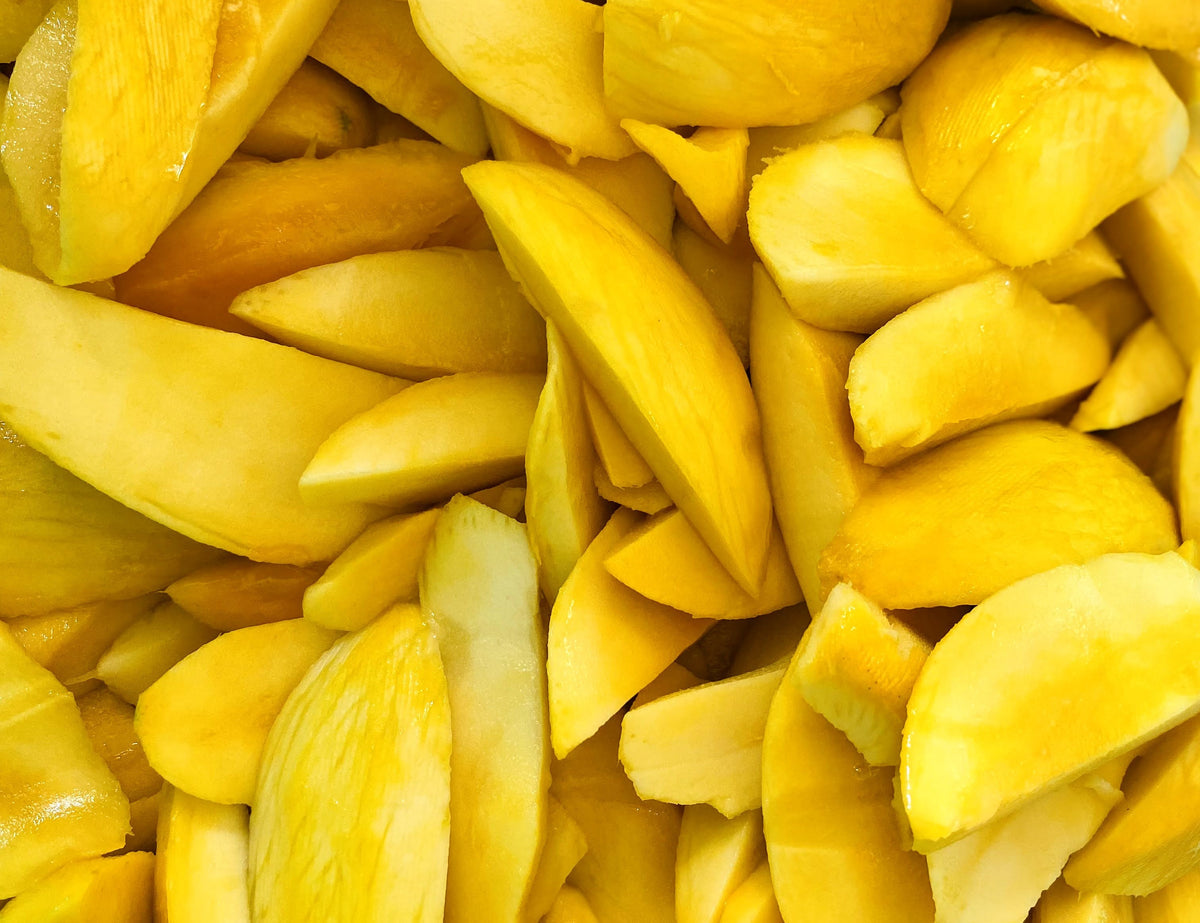
Mango Sandesh Recipe (Bengali Sweet)
A mango sandesh recipe is one of the most joyful things you can make when the mango season arrives. Sandesh — the beloved Bengali sweet made from fresh chenna (Indian cottage cheese) — transforms into something extraordinary when you fold ripe, fragrant mango pulp through the curds. The result is a soft, barely-set confection with a milky sweetness and that unmistakable mango perfume that no artificial flavouring can replicate. This guide walks you through a complete, tested-style recipe using fresh Pakistani mangoes — Sindhri or White Chaunsa — explaining exactly how to make mango sandesh at home, from splitting the milk all the way to the final garnish.
The secret that most recipes skip: the mango matters enormously here. Sandesh is a delicate sweet — it has no strong spices, no heavy fat, no caramel. The mango is the flavour. A fibrous, under-ripe or carbide-ripened fruit will produce a flat, slightly sour result no matter how carefully you handle the chenna. A properly tree-ripened, aromatic Sindhri or Chaunsa — what we call aam sandesh in the family kitchen — produces a sweet that stops conversation. If you want to make this recipe worth the effort, start with fruit that smells like honey and flowers before you even cut it.
Below you will find the full ingredient list, a step-by-step method with temperatures and textures to watch for, tips on the most common failure points, two variations (no-cook and baked), storage guidance, and six frequently asked questions. The recipe yields 18–20 pieces and takes about 50 minutes including chill time.
What Is Mango Sandesh? (And Why It Works So Well)
Sandesh (also spelled shondesh) is a centuries-old Bengali sweet made from chenna — the soft, crumbly curd you get when you acidulate warm milk and drain it. Unlike paneer, chenna is cooked only minimally after straining, so it stays silky rather than rubbery. Because it is essentially a mild fresh cheese, it takes on flavours beautifully. Sugar is kneaded in, then the whole mass is briefly cooked on a tawa or in a karahi to remove excess moisture and develop a clean milky fudge quality.
Adding mango — mango paneer sweet as it is sometimes called outside Bengal — layers a tropical brightness on top of that milky base. The natural sugars in ripe mango also let you use noticeably less added sugar, which means the sandesh stays light rather than cloying. It sets firm enough to shape but melts almost immediately on the tongue. The Bengali sweet-shop tradition distinguishes between nolen gur sandesh (date-palm jaggery), kakra sandesh (dry and crumbly), and the style we are making today: soft, fresh, and eaten within two days — what is sometimes called norom paak or soft-set sandesh.
In the Pakistani and North Indian kitchen, an equivalent tradition of fresh paneer sweets exists, and mango season has always been the prompt to make them. Our family recipe at MMA Mangoes dates back at least two generations, made every June when the first Sindhri boxes came in from the orchard. The Sindhri — large, fiberless, honeyed — is ideal because its pulp is smooth enough to blend straight in without straining.
Choosing the Right Mango for This Recipe
Any variety works in principle, but the results vary significantly. Here is a practical comparison based on the main Pakistani varieties available during the season:
| Variety | Season | Flavour in Sandesh | Pulp Texture | Sugar Adjustment |
|---|---|---|---|---|
| Sindhri | June | Floral, honeyed, very aromatic | Smooth, fibre-free — blend direct | Reduce by 1–2 tsp |
| Anwar Ratol / 12 Number | July | Intensely sweet, slightly resinous | Smooth, rich | Reduce by 1 tbsp |
| Langra | July | Tangy-sweet, complex | Slightly fibrous — pass through sieve | No adjustment needed |
| White Chaunsa (Nawabpuri / Mosami) | August | Delicate, creamy, mild sweetness | Very smooth, almost liquid | Add 1–2 tsp extra |
For a full-flavour result, Sindhri is our top pick when making mango sandesh in June. For August, the White Chaunsa premium box — Nawabpuri or Mosami — gives an almost vanilla-cream sweetness that is uniquely beautiful in the no-cook variation. In both cases, the mango must be genuinely ripe: the skin should yield gently, the aroma should be obvious at arm's length, and the pulp should be fully coloured with no green-white patches near the stone.
Ingredients for Mango Sandesh (Makes 18–20 Pieces)
For the Chenna
- 2 litres full-fat cow's milk (not UHT — fresh pasteurised works best)
- 3–4 tablespoons white vinegar or 4 tablespoons lemon juice (either works; vinegar gives a cleaner flavour)
- Cheesecloth or a clean muslin cloth for straining
For the Sandesh
- 350–380 g chenna (yield from 2 litres milk)
- ½ cup (100 g) fresh ripe mango pulp, smooth — from approximately 1 medium Sindhri or 2 small Anwar Ratol mangoes
- 5–6 tablespoons powdered sugar (icing sugar), or to taste — start with 5
- ¼ teaspoon ground cardamom
- 1 teaspoon rose water (optional, but lovely with Chaunsa)
- A pinch of fine salt — draws out the mango flavour
For Garnish
- Thin slices or small cubes of fresh mango
- A pinch of saffron soaked in 1 tbsp warm milk (optional — stunning with Sindhri)
- Crushed unsalted pistachios or dried rose petals
Equipment: Heavy-bottomed non-stick pan or stainless karahi; wooden spatula or silicone scraper; small moulds or mini cupcake tin (optional); refrigerator.
Step-by-Step: How to Make Mango Sandesh
Step 1 — Make the Chenna (25 minutes)
- Pour the milk into a heavy pot. Bring it to a rolling boil over medium-high heat, stirring occasionally so the bottom does not scorch. This step is non-negotiable — the milk must boil fully, not just steam.
- Remove from the heat. Add your acid: pour in the vinegar or lemon juice in a thin stream while stirring gently. Within 30–60 seconds you will see the curds separate clearly from a pale yellow-green whey. If the separation is incomplete after 90 seconds, add another teaspoon of acid.
- Do not stir vigorously — agitation at this stage breaks the curds into very fine grains, which makes the final texture grainy rather than smooth.
- Line a colander with two layers of muslin or a clean cotton cloth. Pour the curdled milk in. Gather the corners and hang the bundle over your sink or a bowl for 20 minutes — not longer. Over-draining produces a dry, stiff chenna that will crack when kneaded.
- After 20 minutes, press the bundle gently. The chenna should feel moist and soft, not wet and not dry. It will weigh roughly 350–380 g from 2 litres of milk.
Step 2 — Prepare the Mango Pulp
- Cut your ripe mango over a bowl to catch all the juice. Scoop the flesh away from the skin and stone.
- For Sindhri and Anwar Ratol: the flesh is fibre-free — simply mash with a fork or blend for 15 seconds. You want exactly ½ cup (about 100–110 g) of smooth pulp.
- For Langra: pass through a fine sieve after blending to remove fibre. Fibre in the sandesh creates an uneven texture.
- Set aside. Do not refrigerate — cold pulp will shock the chenna and make it release extra moisture during cooking.
Step 3 — Knead the Chenna
- Turn the chenna out onto a clean work surface or into a wide bowl. Using the heel of your palm, knead it firmly for 5–7 minutes. You are breaking down the grains into a smooth, uniform mass — like kneading soft dough. The chenna is ready when it holds together cleanly and no longer leaves white powder on your hand.
- Add the powdered sugar. Knead for another 2 minutes until fully incorporated. Taste — it should be lightly sweet, because the mango will add significant sweetness.
- Add the cardamom, salt, and rose water if using. Knead briefly to distribute.
Step 4 — Cook the Sandesh
- Heat a non-stick pan or heavy karahi on the lowest flame your stove has. Add the kneaded chenna-sugar mass.
- Stir and fold continuously with a spatula. Do not walk away — this stage takes 6–8 minutes and requires constant attention. You are removing residual moisture so the sandesh will set when cooled.
- The mixture will first become loose and a little sticky, then it will start coming away from the sides of the pan. When it gathers into a single mass that pulls cleanly from the pan bottom and no longer leaves a film of moisture, remove immediately from heat.
- Do not overcook. Overcooked sandesh turns grainy, dry, and slightly yellow. Under-cooked sandesh will not hold its shape. The window is narrow — the mass should still look slightly glossy when you remove it.
- Let it cool for 5 minutes until warm but not hot — approximately 40–45°C. If you add the mango while the chenna is still very hot, the heat degrades the fresh mango flavour.
Step 5 — Fold In the Mango
- Add the mango pulp to the warm chenna in two additions, folding gently between each addition. The folding motion — not stirring — preserves some texture contrast and prevents the mixture from becoming completely uniform.
- Taste. Adjust sugar if needed. If the mixture looks too soft or wet (this can happen with very juicy Chaunsa), return briefly to the lowest flame and stir for 2–3 minutes more to tighten it.
- The final mixture should be supple, just slightly sticky, and deeply orange-gold in colour. It will firm further as it chills.
Step 6 — Shape and Chill
- With lightly greased hands (a tiny smear of ghee or neutral oil), roll the mixture into smooth balls of about 30–35 g each, or press into small moulds.
- Traditional shapes: round balls (laddoo-style), flattened discs, or pressed into a petal mould for a flower form.
- Place on a parchment-lined tray. Press a small fresh mango cube or a few pistachio slivers on top. Drizzle on a drop of saffron milk if using.
- Refrigerate uncovered for 30 minutes to set the surface, then loosely cover and chill for at least 1 hour before serving. The sandesh is best at 2–4 hours after making.
Tips for Perfect Results Every Time
The Most Common Mistakes
- UHT or long-life milk: Will not curdle properly — the proteins have been denatured. Always use fresh pasteurised whole milk.
- Over-draining the chenna: 20 minutes hanging is enough. Longer makes the sandesh dry and crumbly.
- Skipping the kneading: Insufficient kneading leaves the chenna grainy. The 5–7 minute mark is not optional.
- High heat during cooking: Causes rapid moisture loss and scorching. Lowest flame only.
- Adding mango to hot chenna: Cooks and deadens the fresh fruit flavour. Wait until the mixture is genuinely warm, not hot.
- Too much mango pulp: More than ¾ cup makes the mixture too wet to set. Stick to ½ cup for a firm result, or add an extra 2-minute cook to compensate.
How to Tell When the Chenna Is Cooked Enough
Press a little of the cooked chenna between your fingers. It should be smooth, slightly waxy, and non-sticky. If it sticks to your fingers like paste, it needs 2–3 more minutes on the heat. If it crumbles, it has gone too far — you can sometimes rescue over-cooked sandesh by kneading in 1–2 teaspoons of warm milk.
Getting the Sweetness Right
The sweetness of mango varies significantly by variety and ripeness. A very ripe Anwar Ratol adds roughly the equivalent of 2 tablespoons of sugar compared to an average-sweet fruit. Always taste the mango before you fold it in, and reserve 1–2 tablespoons of powdered sugar to add after the mango is incorporated if needed.
Variations on the Classic Mango Sandesh Recipe
No-Cook Mango Sandesh (Quick Version)
If you have very good, fresh ricotta or store-bought chenna of reliable quality, you can skip the cooking step entirely. Knead the chenna for 8 minutes, add powdered sugar, then fold in the mango pulp. Press into moulds and refrigerate for 3 hours until firm. This version — sometimes called kancha sandesh — has a slightly more liquid texture and a shorter shelf life (eat within one day), but the mango flavour is more vivid because it is completely unheated. White Chaunsa is particularly excellent in this version; visit our guide to mango kulfi recipe for more ideas on using Chaunsa raw in desserts.
Baked Mango Sandesh (Bhapa Sandesh Variation)
For a custard-like, slightly richer result, prepare the chenna and mango mixture as in the main recipe but do not cook it on the stovetop. Instead, fold in 2 tablespoons of condensed milk and 1 beaten egg yolk (optional — omit for vegetarian). Pour into a greased baking dish, place in a bain-marie, and bake at 160°C for 25–30 minutes until just set. Chill completely before cutting. The texture resembles a very light cheesecake and is spectacular with a Sindhri mango compote on top.
Mango Sandesh with Saffron and Cardamom
The Mughal-inspired version adds saffron steeped in 2 tablespoons of warm whole milk along with the mango. Use slightly less mango pulp (¼ cup) so the saffron flavour is not overwhelmed. The result is a richer, more complex sweet that works beautifully at an Eid table or alongside tea. Sindhri season (June) aligns perfectly with Eid in some years — the combination is special.
Mango and Pistachio Sandesh
Fold 3 tablespoons of finely ground unsalted pistachios into the chenna along with the mango. The pistachio adds a subtle savouriness and a beautiful green fleck through the orange-gold mixture. Use raw pistachios lightly toasted and cooled, not the salted roasted kind.
Storage and Shelf Life
Fresh sandesh is at its best within 4–6 hours of making, when the chenna is still silky and the mango flavour is vivid. However, it stores well under refrigeration for up to 2 days in an airtight container. After 2 days the chenna begins to absorb surrounding flavours and the mango aroma fades.
- Room temperature: Maximum 2 hours — chenna is a fresh dairy product.
- Refrigerated (airtight): Up to 2 days. Allow to come to room temperature for 15 minutes before serving for the best texture.
- Freezing: Possible but not ideal — the texture becomes slightly granular on thawing. If you must freeze, wrap each piece individually and thaw slowly in the refrigerator overnight.
- Gifting: Pack in a single layer in a sturdy box with parchment dividers. Transport in a cool bag. Sandesh travels well when cold and well-supported.
Do not leave sandesh near strong-smelling foods in the refrigerator — fresh cheese absorbs odours readily. A separate airtight container is essential.
Serving Suggestions
Mango sandesh is typically served chilled or at cool room temperature. In the Bengali tradition it appears at the end of a meal alongside a glass of cold water. In the Pakistani household context, it works beautifully as:
- A plated dessert after a formal dinner, arranged on a banana leaf or fresh mango slices
- An Eid sweet alongside kheer and gulab jamun for variety
- A sophisticated accompaniment to afternoon chai — the mild sweetness does not fight the tea
- A gift sweet, packed in small paper cups in a decorative box
For a complete summer mango dessert spread, pair this sandesh with homemade mango kulfi — the cold, creamy kulfi and the soft, milky sandesh complement each other beautifully and showcase the mango from two entirely different textural angles.
If you want to present the sandesh at its most striking, arrange the pieces on a white plate with a small pool of chilled mango coulis (just blended and strained fresh mango pulp with a few drops of lemon juice), a scattering of crushed pistachios, and a few dried rose petals. It photographs beautifully and tastes even better.
The Quality of the Mango Changes Everything
We have made this recipe with mangoes from different sources over the years and the difference is not subtle. A mango that was picked green and ripened off the tree with carbide produces a flat, slightly chemical sweetness in the sandesh. A mango that was hand-picked at peak ripeness from the orchard — the way every box from our farm in Multan is harvested — produces a sandesh so fragrant that guests will ask what you added before they realise it is just the fruit itself.
The Sindhri variety, in particular, has a floral, almost jasmine-honey quality that survives the brief heat of the cooking step and blooms again when the sandesh is chilled. The Anwar Ratol — especially the prized small-fruited "12 Number Ratol" — is intensely sweet with a slight resinous depth that pairs beautifully with the milky chenna base. If you want to make the best possible version of this recipe, it starts with sourcing the right fruit. Browse our premium Pakistani mango gift boxes to see which variety is currently in season and available for delivery.
Frequently Asked Questions
Can I use store-bought paneer instead of making chenna at home?
You can, but the result will be noticeably different. Store-bought paneer is firmer and has a rubbery texture because it is pressed much harder than chenna. If you use it, grate it finely, then knead it vigorously for 10–12 minutes — longer than with fresh chenna — to soften and smooth it. The mango sandesh will still be good but will have a slightly firmer, less silky texture than the fresh-chenna version. Fresh chenna takes only 25 minutes and is genuinely worth making from scratch for this recipe.
My chenna mixture became very soft after adding the mango pulp — what do I do?
This is normal, especially with very ripe, juicy mangoes like Chaunsa. Return the pan to the lowest flame and stir continuously for 3–5 more minutes until the mixture pulls away from the pan again. The additional moisture from the mango just requires a little more cooking time to evaporate. Do not increase the heat — patience on a low flame gives a smoother result than rushed high-heat cooking.
How much mango pulp should I use for a strong mango flavour without the sandesh going too soft?
½ cup (100 g) is the sweet spot for a clear mango flavour while maintaining structure. If you want a more intense flavour, use ¾ cup but add an extra 3–4 minutes of cooking after folding in the pulp to compensate for the extra moisture. Beyond ¾ cup the sandesh will not set properly without a significant extension of the cooking time, which risks drying out the chenna base.
What is the difference between aam sandesh and regular sandesh?
Aam sandesh simply means "mango sandesh" — aam being the Hindi and Bengali word for mango. It is a seasonal variation of the classic plain or rose-water sandesh, made specifically when fresh mangoes are available. The base recipe (chenna + sugar + brief cooking) is identical; the only difference is the addition of fresh mango pulp at the end. Some recipes also add a small amount of mango powder (amchur) to boost the flavour, but this is not traditional and is unnecessary with genuinely ripe fruit.
Can this mango paneer sweet be made without any cooking at all?
Yes — this is the no-cook or kancha (raw) style. Knead the fresh chenna thoroughly for 8–10 minutes with powdered sugar until completely smooth, then fold in the mango pulp without any heat. Press into moulds and refrigerate for 3 hours minimum. The texture is softer and the mango flavour is more vivid because nothing has been heated. The trade-off is a much shorter shelf life — eat within 24 hours and keep consistently refrigerated. This version works best with smooth, non-fibrous varieties like Sindhri or Chaunsa.
Can I prepare mango sandesh in advance for a party or Eid gathering?
Yes, with some care. Make the sandesh up to 18 hours in advance, shape and garnish, and store covered in the refrigerator. Bring out 15 minutes before serving so they return to a silky texture — sandesh straight from the fridge can feel slightly stiff. If you are making a large batch, note that the cooked mixture (before shaping) can be refrigerated for up to 4 hours and then warmed very briefly and re-kneaded before shaping. Do not make the full recipe more than 24 hours ahead — fresh chenna desserts are at their best the day they are made.
Ready to make this recipe with fruit that actually lives up to its reputation? Order your box of hand-picked Pakistani Sindhri or Chaunsa mangoes directly from our family orchard — free delivery nationwide across Pakistan, worldwide shipping available, and Cash on Delivery. Browse our premium Pakistani mango gift boxes or reach us on WhatsApp at +92 300 9555810.