
Mango Phirni Recipe (Creamy Rice Pudding)
A mango phirni recipe that actually works starts with one thing: a mango ripe enough to eat straight from your hand. Phirni — the slow-cooked, ground-rice milk pudding of Mughal kitchens — is already one of Pakistan and India's most beloved desserts. Add a Sindhri or White Chaunsa mango at peak sweetness, and what you get is something that tastes like summer distilled into a clay cup. This guide walks you through everything: the ingredients, the method, the tricks that stop your phirni from turning grainy or too thick, and the variations worth trying. If you have been searching for how to make mango phirni that is silky, fragrant, and genuinely restaurant-quality at home, you are in the right place.
We make this dessert every mango season at our family orchard in Multan. The Sindhri variety — honeyed, completely fibreless, with that warm golden flesh — blends into phirni in a way that no tinned or off-season mango can match. When Sindhri gives way to Langra in July and then to White Chaunsa in August, each variety brings its own character to the dish: Langra adds a faint tang that cuts through the richness of the milk; Chaunsa gives a buttery depth that feels almost like adding cream. The recipe below uses Sindhri as the base, with notes for swapping in other varieties as the season moves.
Whether you call it mango rice pudding, mango phirni, or simply the dessert your grandmother made in the clay matka at Eid, this recipe covers every step, every pitfall, and every upgrade — so your first attempt turns out as good as the tenth.
What Is Phirni? Understanding the Mango Rice Pudding Base
Phirni is not the same as kheer. Both are milk-based rice desserts, but the distinction matters. Kheer uses whole or broken rice grains; phirni uses coarsely ground rice — soaked, dried, and blended to a rough powder. The ground rice gives phirni its characteristic smooth-but-textured body: thicker than panna cotta, lighter than barfi, with a slight grain that you can feel but not chew. It is traditionally set in shallow shikora or matka clay bowls, which absorb a little moisture and lend a faintly earthy note to the flavour.
Mango phirni layers the classic base with fresh mango pulp, added off the heat so the enzymes in raw mango remain active and the colour stays a vivid apricot-gold rather than browning out. The result is a dessert that is simultaneously rich (full-fat milk, slow-reduced) and fresh-tasting (raw fruit folded in at the end). It serves cold, making it ideal for the 40°C evenings of a Pakistani mango summer.
Phirni vs Kheer vs Firni — What Is the Difference?
| Feature | Phirni / Firni | Kheer | Mango Phirni |
|---|---|---|---|
| Rice form | Coarsely ground | Whole / broken | Coarsely ground |
| Texture | Smooth, custard-like | Grainy, porridge-like | Smooth with soft mango pieces |
| Serving temperature | Cold (set in bowl) | Warm or cold | Cold |
| Mango added | Not traditional | Sometimes | Yes — raw pulp off the heat |
| Cook time | 30–40 min | 45–60 min | 30–40 min + chill |
Best Mangoes for Mango Phirni Recipe — Variety Guide
The single most important ingredient is the mango. Pakistani premium mangoes vary by season, flavour profile, and texture — and each one changes the character of your phirni. Here is how the major varieties perform in this recipe:
| Variety | Peak Season | Flavour in Phirni | Sugar adjustment |
|---|---|---|---|
| Sindhri | June | Honeyed, floral, zero fibre — blends perfectly smooth | Reduce sugar by 1 tbsp; Sindhri is naturally sweet |
| Langra | July | Aromatic, faint tangy edge — brightens the milky base | Keep sugar as written |
| Anwar Ratol / 12 Number Ratol | July | Intensely sweet, small yield per fruit — extraordinary aroma | Reduce by 2 tbsp; very high natural Brix |
| White Chaunsa (Nawabpuri / Mosami) | August | Buttery, rich, cream-like — gives the most indulgent result | Reduce by 1 tbsp; add a pinch of cardamom extra |
The premium Pakistani mango gift boxes from MMA Mangoes include hand-picked, carbide-free fruit from our family orchard in Multan — the same mangoes we use in our own kitchen recipes. Our White Chaunsa premium box is particularly spectacular in phirni: the buttery flesh blends without any stringiness and the aroma carries all the way through chilling overnight.
Mango Phirni Recipe — Ingredients (Serves 6)
These quantities fill six standard clay shikora or six 150ml ramekins. Scale up proportionally for larger gatherings.
For the Phirni Base
- 1 litre full-fat whole milk (Buffalo milk gives the richest result; cow milk works fine)
- 4 tablespoons long-grain or basmati rice — soaked 30 minutes, drained, and dried on a cloth
- 5–6 tablespoons caster sugar (adjust to mango sweetness — see variety table above)
- 4–5 green cardamom pods, seeds only, coarsely crushed in a mortar
- 1 teaspoon rose water (optional — use only if your mango is mild)
- A generous pinch of saffron strands, bloomed in 2 tablespoons warm milk
For the Mango Layer
- 2 large ripe Sindhri or White Chaunsa mangoes (approximately 400–450g peeled, de-stoned flesh)
- 1 additional tablespoon sugar if mangoes are slightly under-ripe
For Garnish
- 1 tablespoon unsalted pistachios, slivered fine
- Dried rose petals (food grade), a pinch
- A few thin slices of fresh mango
- Silver leaf (vark) — optional, for celebratory serving
How to Make Mango Phirni — Step-by-Step Instructions
Step 1: Grind the Rice
Spread your soaked, drained rice on a clean kitchen cloth and let it air-dry for 15 minutes. It does not need to be bone dry — just surface-dry. Transfer to a spice grinder or small blender and pulse in short bursts until you have a coarse, uneven powder with some slightly larger fragments remaining. Do not grind to a fine flour. The rough texture is what gives phirni its character. Mix this ground rice with 4 tablespoons of cold milk from your litre and stir into a smooth, lump-free slurry. Set aside.
Step 2: Reduce the Milk
Pour the remaining milk into a heavy-bottomed pan — ideally a wide, shallow one so evaporation happens faster. Bring to a full boil over medium-high heat, stirring to prevent a skin forming. Once boiling, reduce the heat to medium-low and simmer, stirring regularly, for 15 minutes. The milk should reduce to about 750ml. You will see it thicken slightly and take on a creamier colour. Scrape the sides of the pan each time you stir to incorporate the cooked solids back into the milk — this is where flavour hides.
Step 3: Add the Rice Slurry
Give your rice slurry a quick stir (the starch settles fast) and pour it into the simmering milk in a slow, steady stream, stirring constantly as you pour. This is the step most home cooks rush and regret: if you add the slurry too fast or stop stirring, you get lumps. Keep the heat at medium-low. Stir continuously for 8–10 minutes as the mixture thickens. It is ready for the next step when a spoonful dropped on a cold plate sets firm within 20 seconds.
Step 4: Add Sugar, Cardamom, and Saffron
Add the sugar and stir until fully dissolved — about 2 minutes. Add the crushed cardamom seeds and the bloomed saffron with its milk. If using rose water, add it now. Taste. The base should be perceptibly sweet but not cloying — remember that chilling dulls sweetness slightly, so season about 10% sweeter than you want to eat it. Remove from heat completely and allow to cool for 10 minutes, stirring occasionally to prevent a skin forming.
Step 5: Prepare the Mango Pulp
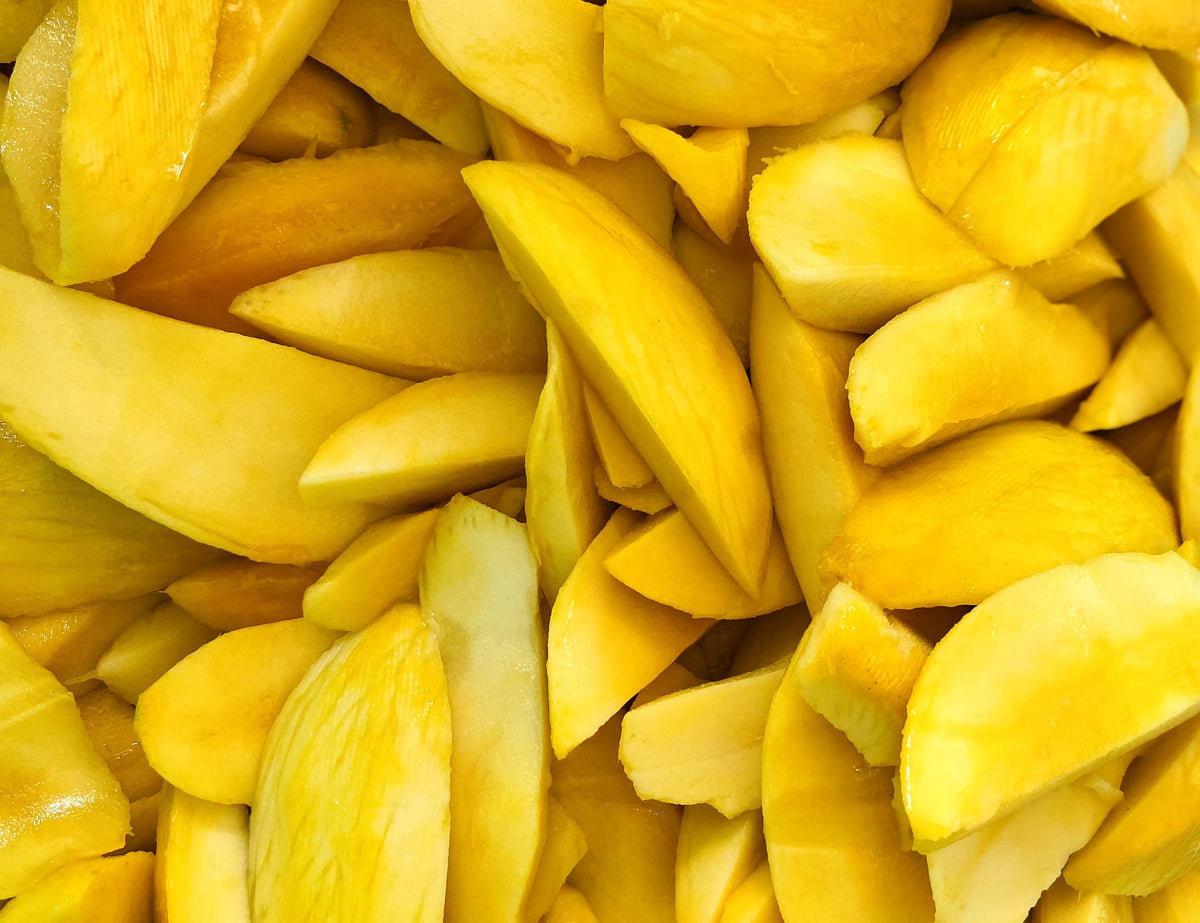
While the base cools, peel your mangoes and cut the flesh away from the stone. If using Sindhri — the fibreless variety — the flesh should slide cleanly off and blend without any straining. Transfer to a blender and blitz to a smooth, silky pulp. Reserve about one-quarter of the pulp in a separate bowl for swirling on top of set phirni. For a chunkier variation, dice one of the two mangoes into 1cm cubes and fold in separately from the blended pulp.
Step 6: Fold In the Mango — The Critical Step
Once the phirni base has cooled to below 45°C (warm to the touch, not hot), fold in three-quarters of your mango pulp. Never add mango to actively boiling or very hot milk — the heat denatures the mango's natural enzymes and can cause the milk proteins to split slightly, giving you a granular texture. Folding at warm-but-not-hot temperature keeps the mixture silky and preserves the mango's bright, fresh flavour. Stir gently with a spatula in large, slow arcs rather than vigorous beating.
Step 7: Pour, Set, and Chill
Ladle the mango phirni into your serving vessels — clay shikora, ceramic ramekins, or small glass cups all work. Fill each about three-quarters full. Spoon a teaspoon of the reserved mango pulp on top of each. Lay a piece of cling film directly on the surface of each cup (touching the phirni) to prevent a skin forming. Refrigerate for a minimum of 4 hours; overnight is better. The phirni will firm up significantly as it chills — if it seems too liquid in the pan, trust the process.
Step 8: Garnish and Serve
Remove from the refrigerator 10 minutes before serving — phirni is best eaten cold but not fridge-cold. Remove the cling film, add a few slivers of fresh mango, a scattering of pistachio, and a pinch of dried rose petals. Serve immediately. The clay bowls, if you are using them, will have absorbed a trace of moisture and imparted a subtle matka earthiness that is unmistakably Desi.
Tips and Tricks for Perfect Mango Phirni Every Time
- Use full-fat milk. Low-fat or skimmed milk does not reduce to the same creamy consistency. If you have access to buffalo milk, use it — the higher fat content gives a richness that is impossible to replicate otherwise.
- The grind matters. Too fine and your phirni becomes gluey like a starch pudding; too coarse and it feels sandy. Aim for a texture like medium polenta or slightly rough semolina.
- Stir constantly once the slurry goes in. This is not a recipe that rewards multitasking at this stage. A five-second lapse over medium heat with a rice slurry is enough to form a lump skin on the bottom of the pan.
- Cool before adding mango. See Step 6 above — this is the step most recipes gloss over and most home cooks get wrong.
- Clay bowls are not just aesthetic. The porous clay subtly regulates moisture and temperature as the phirni sets, giving a slightly firmer edge and a gentler chill than glass or ceramic.
- Overnight is better than 4 hours. The rice starch continues to set and the saffron blooms deeper into the base over 8–12 hours of chilling.
- Taste the mango first. A truly ripe Sindhri or Chaunsa at peak season needs almost no added sugar. An out-of-season mango may need an extra tablespoon. The recipe as written assumes peak-ripeness fruit.
Phirni with Mango — Variations Worth Trying
Mango and Condensed Milk Phirni
Replace 4 tablespoons of the caster sugar with 3 tablespoons of sweetened condensed milk, added with the rice slurry. The condensed milk adds a faint caramel undertone that pairs beautifully with Langra's natural tanginess. This version is slightly richer and slightly sweeter — reduce the condensed milk to 2 tablespoons if using Anwar Ratol.
Layered Mango Phirni (Traffic Light)
Make a double batch of the base and split it equally before adding mango. Into one half, fold Sindhri pulp (golden-yellow layer). Keep the other half plain cream-coloured. Pour the plain layer first into tall glasses, chill for 1 hour until just firm, then pour the mango layer on top. Garnish with a small cube of fresh mango. The contrast of the creamy white base and the apricot mango layer is visually striking and gives guests two textures in one cup.
Low-Sugar / Diabetic-Friendly Version
Use 2 tablespoons of caster sugar and 1 tablespoon of stevia-based sweetener. Use the sweetest variety available (Sindhri or Ratol) so the natural mango Brix does most of the sweetening work. The texture is essentially unchanged; only the sweetness level differs.
Mango Phirni Tart (Modern Presentation)
Set the phirni in a blind-baked shortcrust pastry shell (20cm round) at room temperature for 30 minutes before refrigerating. Once chilled, top with a thin layer of the reserved mango pulp and garnish as above. Slice like a tart. This works best with a slightly thicker phirni — add 1 extra tablespoon of ground rice to the recipe.
Mango Phirni Pairing Suggestions
Phirni is a dessert that pairs generously with other Desi flavours and some surprising Western ones. A small glass of our mango lassi recipe served alongside is actually a classic combination at family Iftaar tables — the yoghurt tang in the lassi balances the richness of the phirni. Other pairings worth trying:
- After biryani or nihari: The cooling dairy-mango combination is a perfect reset for a heavy, spiced main.
- With seviyan (vermicelli milk pudding): Two-dessert Eid platter — contrast of textures, both cold.
- With strong cardamom chai: Serve the phirni slightly warmer (20 minutes out of the fridge) alongside a cup of hot chai for an afternoon snack that holds its own against any patisserie.
- As a brunch dish: Smaller, less sweet portions served in espresso cups are an impressive and unexpected brunch course.
Storage and Make-Ahead Guide
Mango phirni stores well and in some ways improves over its first 24 hours. Here are the practical storage parameters:
- Refrigerator: Covered tightly with cling film (touching the surface), mango phirni keeps for up to 3 days. After 3 days the mango pulp begins to oxidise and the flavour flattens.
- Freezer: Not recommended. Rice starch desserts turn grainy when frozen and thawed; the texture on defrosting is unpleasant.
- Make-ahead (large gatherings): The plain phirni base (without mango) can be made up to 2 days ahead and stored covered in the refrigerator. Fold in fresh mango pulp 4–6 hours before serving. This gives you the freshest mango flavour possible.
- Individual cups vs. one large dish: Individual cups set faster (3–4 hours) and are easier to serve. A large dish takes 6–8 hours to set uniformly. For Eid or a dinner party, portion into individual cups the night before.
Frequently Asked Questions
Can I use tinned or frozen mango pulp instead of fresh mangoes?
You can, but the flavour difference is significant. Tinned mango pulp (typically Alphonso variety, processed and sweetened) lacks the aromatic complexity of a fresh Sindhri or Chaunsa. If fresh Pakistani mangoes are not available in your location, use a good-quality unsweetened frozen mango pulp and reduce the recipe sugar by 1 tablespoon. The texture will be fine; the fragrance will be muted. If you are in Pakistan during mango season, there is simply no substitute for fresh fruit.
Why did my phirni turn out grainy or lumpy?
Three common causes: (1) The rice was ground too coarsely, leaving visible chunks that do not fully dissolve — aim for a rough but not chunky grind. (2) The slurry was added too quickly to hot milk without constant stirring, forming lumps before the starch could disperse. (3) The mango was added to milk that was still too hot, causing the proteins to separate slightly. Strain the phirni through a coarse sieve immediately if you catch lumpiness early; whisk vigorously and reheat gently while stirring to dissolve most lumps.
How early in advance can I make mango phirni for a party?
The best window is 12–18 hours before serving. This gives the phirni time to set fully and the saffron and cardamom to bloom into the base, but keeps the mango flavour fresh and bright. If making more than 24 hours ahead, use the make-ahead method described above: prepare the plain base, refrigerate it, and fold in fresh mango pulp 4–6 hours before guests arrive.
Which mango variety gives the best mango phirni recipe result?
Sindhri (June) is the easiest to work with because it is completely fibreless, blends perfectly smooth, and its honeyed sweetness needs almost no supplementation. White Chaunsa (August) gives the most indulgent, buttery result — ideal for a special occasion. Anwar Ratol produces the most intensely aromatic phirni but the fruits are small and you need more of them. Langra adds a pleasant tang if you prefer phirni that is not overwhelmingly sweet. All five varieties are available as carbide-free, hand-picked gift boxes from our farm.
Is mango phirni gluten-free?
Yes, provided all your ingredients are free from cross-contamination. Rice, milk, sugar, cardamom, saffron, rose water, and mango contain no gluten. Check your rose water and saffron labels if you are coeliac, as some processed spices are packed in facilities that also handle wheat. The recipe as written uses no wheat flour, semolina, or any other gluten-containing ingredient.
Can I make mango phirni without sugar, using only the mango's natural sweetness?
It depends entirely on the variety and ripeness of your mango. A perfectly ripe Anwar Ratol or peak-season Sindhri from a Multan orchard is sweet enough that many people in our family make phirni with only 2 tablespoons of added sugar. A mango that was picked under-ripe and ripened off the tree will not have the same Brix and will taste flat without added sugar. Taste your mango first — if you can eat it happily without any accompaniment, halve the recipe sugar and adjust to taste at Step 4.
Order the Mangoes That Make This Recipe Worth Making
A recipe is only as good as its ingredients. Our family has grown and hand-picked mangoes in Multan for three generations — Sindhri in June, Langra and Ratol in July, White Chaunsa through August. Every box is carbide-free, hand-picked at peak ripeness, cold-chain handled from orchard to your door, with free delivery nationwide across Pakistan and worldwide shipping available. Cash on Delivery accepted. Boxes start at Rs 2,550 for a 5kg premium gift pack.
Browse the full season range and order your box at MMA Mangoes premium mango gift boxes, or message us directly on WhatsApp at +92 300 9555810 to ask about current availability, variety, or bulk orders. When the mangoes are this good, the phirni makes itself.