
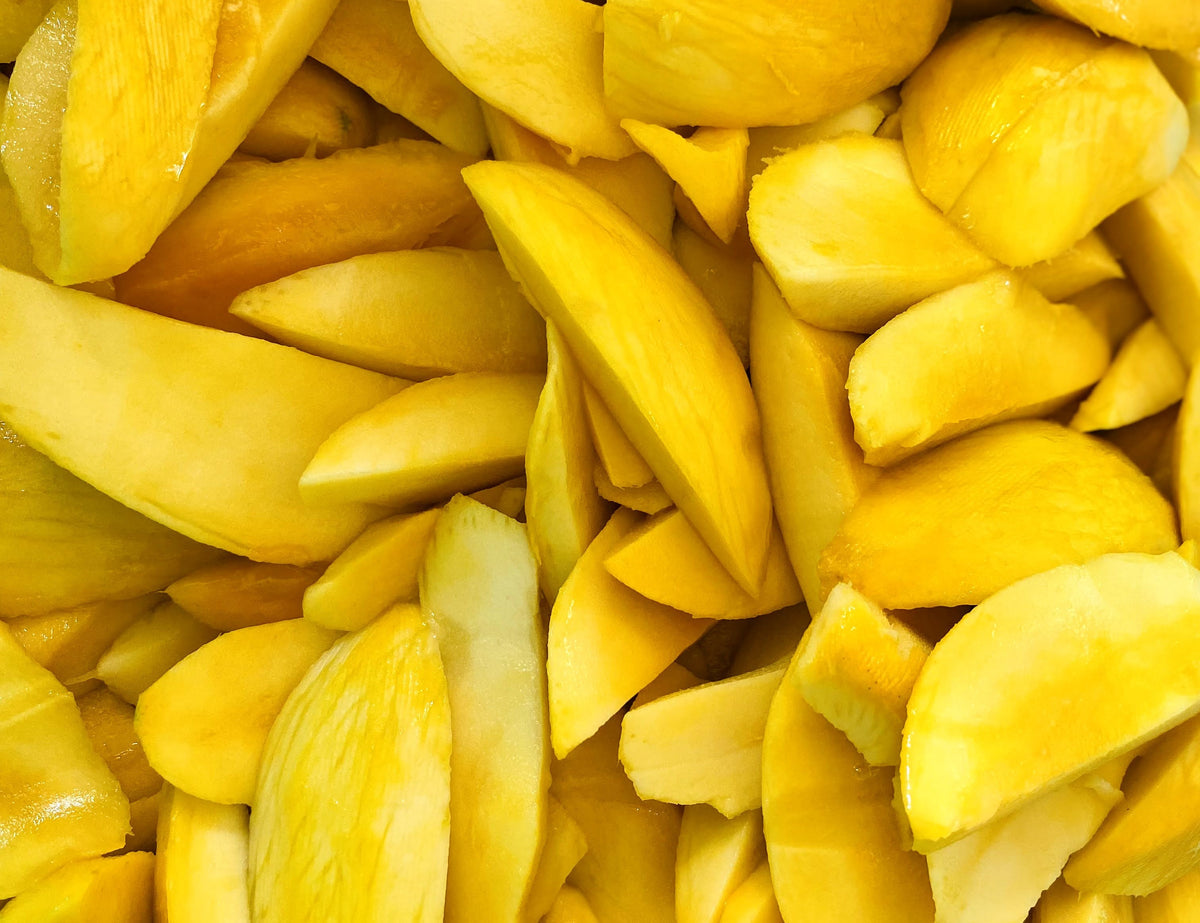
Homemade Mango Jam Recipe with Fresh Pakistani Mangoes
A good mango jam recipe is one of the best things you can make during mango season — thick, glossy, jewel-bright preserve that holds the taste of summer in every spoonful. This guide walks you through how to make mango jam at home using fresh, ripe Pakistani mangoes, with results that far outshine anything from a supermarket shelf. Whether you reach for a fragrant Sindhri or a honeyed White Chaunsa, the technique is straightforward and the payoff is spectacular.
We tested this recipe repeatedly with both Sindhri and Chaunsa mangoes — the two varieties most people have to hand in Pakistan between June and August. Sindhri gives a deep golden jam with a floral finish; Chaunsa produces something paler, almost amber, intensely sweet with a wispy aftertaste that borders on caramel. Either way, the method below works. The only real rule is this: use fruit at peak ripeness. A slightly underripe mango will not give you the flavour depth that makes this jam worth eating on plain bread at midnight.
If you want the finest base ingredient, start with our premium Pakistani mango gift boxes — hand-picked at peak ripeness, packed at the farm in Multan, and delivered fresh to your door. Cold-chain delivery means the fruit arrives in exactly the condition you need for preserving.
Why Pakistani Mangoes Make the Best Mango Jam
Not all mangoes are equal in a jam pot. The varieties that grow in Pakistan's mango belt — from Multan and Rahim Yar Khan down through Sindh — have Brix levels (sugar content) that routinely exceed 18–22, compared with 12–14 for typical supermarket mangoes imported from South-East Asia or South America. Higher natural sugar means:
- Less added sugar required to reach a set, so the fruit flavour stays front and centre.
- Faster evaporation to gel point — the jam cooks down in 20–25 minutes rather than 40+.
- A richer colour: Sindhri jam is deep saffron; Chaunsa jam goes amber-gold.
- Better shelf life, because the jam hits a higher soluble-solids concentration.
The fibre-to-water ratio also matters. Pakistani Sindhri and Anwar Ratol are relatively low-fibre, smooth-textured mangoes — they puree into a silky base without the stringy threads you get from Tommy Atkins or Kent mangoes. Chaunsa, particularly the Nawabpuri White Chaunsa, dissolves almost completely when cooked, giving an incredibly smooth finished preserve. You can order a White Chaunsa premium box directly if you want to make a single-variety batch of this elegant, pale-gold jam.
Ingredients for the Mango Jam Recipe
This recipe makes approximately 4 standard 250 g jars (roughly 1 kg finished jam). Scale up proportionally — the ratio of fruit to sugar is what matters.
- 1.2 kg fresh ripe mango flesh — about 3–4 large Sindhri or 5–6 Chaunsa mangoes, peeled and stoned (yield from whole fruit is typically 55–65%)
- 600 g white granulated sugar (50% of fruit weight by default; see note below)
- 3 tablespoons fresh lemon juice (approximately 1.5 lemons) — provides pectin and acid for set
- 1 teaspoon lemon zest, finely grated — brightens the flavour
- 1/4 teaspoon ground cardamom (optional but traditional in Pakistani preserves)
- Pinch of salt — balances sweetness
Note on sugar quantity: Ripe Pakistani mangoes are naturally high in sugar. For a less-sweet jam that relies on the fruit, use 450 g (37.5%). For a classic preserve with a longer shelf life at room temperature, stick to 600 g. Do not drop below 35% or the jam may not set safely at room temperature.
Equipment You Need
- Heavy-bottomed saucepan or jam pan (stainless steel or enamel) — minimum 3-litre capacity to allow for bubbling
- Wooden spoon or heat-resistant silicone spatula
- Blender or immersion blender (for pureeing)
- Kitchen scale
- Four clean 250 ml glass jars with lids, sterilised
- Jam funnel (optional but helpful)
- Chilled plate in the freezer (for the set test)
How to Make Mango Jam: Step-by-Step
Step 1 — Prepare the Mangoes (15 minutes)
Peel the mangoes and cut the flesh away from the stone. Roughly chop and weigh out 1.2 kg. Place in your blender and pulse to a coarse puree — not completely smooth; a little texture is pleasant. Alternatively, mash thoroughly with a potato masher if you prefer a more rustic fresh mango jam. Transfer to the saucepan.
Step 2 — Macerate with Sugar (30 minutes to overnight)
Add the sugar, lemon juice, lemon zest, and salt directly to the mango puree in the pan. Stir well. Let the mixture sit uncovered for at least 30 minutes (or overnight in the fridge). This maceration step dissolves most of the sugar before heat is applied, which reduces the risk of burning and helps extract any remaining pectin from the fruit fibres. The mixture will become noticeably more liquid as the sugar draws out moisture.
Step 3 — Cook to the Setting Point (20–30 minutes)
Place the pan over medium-high heat. Stir continuously until the sugar has fully dissolved — you should be able to feel no grittiness against the pan bottom. Bring to a full rolling boil (a boil you cannot stir down). Reduce heat to medium and cook at a steady boil, stirring every 2–3 minutes to prevent sticking. The jam will gradually thicken as water evaporates. Add cardamom (if using) at the 15-minute mark.
Step 4 — Test for Set (the Wrinkle Test)
After 20 minutes of boiling, spoon a small amount onto your chilled plate. Wait 60 seconds, then push the edge with your finger. If the jam wrinkles and holds its shape, it is ready. If it runs liquid, cook for another 3–5 minutes and retest. The target temperature on a sugar thermometer is 104–105°C (219–221°F) — this is the classic jam/preserve setting point. Pakistani mango jam often reaches set quickly due to high natural sugars, so start testing at 18 minutes.
Step 5 — Skim and Fill Jars
Remove the pan from heat. Skim off any foam from the surface with a spoon. Let the jam rest for 5 minutes — this helps it settle and reduces air bubbles. Using a jam funnel, ladle hot jam into your sterilised jars, filling to within 5 mm of the rim. Wipe rims clean, apply lids tightly, and invert the jars for 2 minutes (this creates a partial vacuum seal without a water bath).
Step 6 — Cool and Label
Turn jars upright and leave undisturbed until completely cool — at least 2 hours. You should hear the lids pop down as they seal. Label with the date and mango variety. Done.
Mango Jam Yield, Sugar and Timing at a Glance
| Mango Variety | Sugar % of Fruit Weight | Approx Cook Time to Set | Finished Colour | Flavour Notes |
|---|---|---|---|---|
| Sindhri | 50% | 20–25 min | Deep saffron gold | Floral, mango-forward, slight tartness |
| White Chaunsa (Nawabpuri / Mosami) | 45–50% | 22–28 min | Pale amber-gold | Caramel undertone, very smooth, intensely sweet |
| Langra | 50% | 25–30 min | Yellow-green | Tangy, aromatic, slightly resinous |
| Anwar Ratol | 45% | 18–22 min | Deep orange-gold | Intensely perfumed, honey notes, thin consistency |
Tips for a Perfect Fresh Mango Jam at Home
Use ripe but not overripe fruit
Jam needs the natural pectin concentrated just under the skin and near the stone — pectin levels peak at full ripeness and begin to break down in overripe, fermented fruit. A fully ripe mango that gives slightly to pressure but has no fermented smell is ideal. This is why farm-fresh, hand-picked mangoes produce consistently better jam than fruit that has sat in a distribution chain for days.
Do not skip the lemon juice
Mangoes are relatively low in natural pectin and their pH is borderline for setting (pH 3.5–4.5). Lemon juice drops the pH to the 3.0–3.5 range where pectin — both native and any you might add — gels most effectively. It also prevents enzymatic browning and adds brightness that cuts through the sweetness.
Use a wide, heavy pan
Surface area equals evaporation speed. A wide jam pan or even a large wok-style pan gives you 30–40% more surface area than a deep saucepan and cuts your cooking time significantly. A heavy bottom prevents scorching at the high sugar concentrations you reach near setting point.
Stir constantly in the final five minutes
As the jam thickens, the risk of burning increases sharply. The bottom of the pan can reach temperatures well above the jam surface temperature. Keep the spatula moving across the entire base during the last stages.
Sterilise jars properly
Wash jars in hot soapy water, rinse, then place upright in an oven at 120°C for 15 minutes. Remove just before you need them. Lids can be boiled for 5 minutes. Filling hot jam into hot jars and inverting immediately gives an effective seal for refrigerator storage. For pantry storage over 3 months, use a proper water-bath canning process.
Mango Jam Variations Worth Trying
Mango and Cardamom Preserve
This is the classic aam ka murabba riff in jam form. Increase cardamom to 1/2 teaspoon and add a pinch of saffron dissolved in one tablespoon of warm water at the end of cooking. The result is heady, aromatic, and unmistakably South Asian — extraordinary on warm paratha or spread inside a croissant.
Spiced Mango Jam with Ginger
Add 1 tablespoon freshly grated ginger (or 1 teaspoon ground ginger) with the sugar at the maceration stage. Ginger adds warmth and a slight bite that makes the jam more versatile as a savoury condiment — it pairs beautifully with cheese, grilled chicken, or used as a glaze.
Mango Chilli Jam
A more adventurous variation: add 1–2 deseeded green chillies, finely chopped, and reduce sugar by 10%. The result is a sweet-hot condiment ideal for cheese boards, grilled meat, or samosas. Use Sindhri for this — its slight tartness holds up against the chilli better than the sweeter Chaunsa.
Mixed Pakistani Mango Jam
Use a 50/50 blend of Sindhri and Chaunsa. The Sindhri contributes body and a floral top note; the Chaunsa contributes sweetness and a smooth, almost honeyed base. This blend is often considered the most complex single-variety-blend jam you can make and is a good use of leftover fruit from two different boxes.
Mango Jam with Vanilla
Split and scrape half a vanilla pod into the jam during the final 10 minutes of cooking. Vanilla and mango have complementary aromatic compounds — the result is reminiscent of a high-end French confiture and works brilliantly on plain white bread or stirred into yoghurt. If you enjoy mango desserts, also try our mango kulfi recipe — another way to showcase premium ripe mangoes in a traditional frozen dessert.
How to Store Mango Jam
Sealed, unopened jars
Properly sealed jars (confirmed by the lid-pop when cooling) stored in a cool, dark cupboard: up to 12 months. Check the seal before opening — lid should be concave (pressed down), not domed. Discard if the lid is raised or if there is any off smell on opening.
Open jars
Once opened, refrigerate and use within 4–6 weeks. Always use a clean, dry spoon — moisture and contamination are the main causes of early mould.
Freezer storage
Mango jam freezes well for up to 12 months. Freeze in small portions (100–150 g) in zip-lock bags or small containers with headspace. Thaw overnight in the refrigerator. The texture may be marginally softer after freezing but the flavour is unaffected.
Signs your jam has not set
If you open a jar after cooling and the jam is too runny, it did not reach setting point. Empty the jars back into the pan, bring to the boil again, and cook a further 5–8 minutes before refilling into re-sterilised jars. This rework method is reliable with mango jam because there is minimal risk of the colour turning dark from extended cooking.
Serving Ideas
Mango jam is one of the most versatile preserves in the pantry. Here are the best uses:
- Classic: on toast or paratha — the simplest and, honestly, the best showcase for a single-variety jam made from premium fruit.
- Stirred into yoghurt or lassi — a teaspoon of Chaunsa jam swirled into full-fat yoghurt rivals any flavoured yoghurt you can buy.
- Filling for pastries — use as a thumbprint cookie filling, tart filling, or rolled inside croissant dough before baking.
- Glaze for grilled meat — mango jam thinned with a splash of lime juice and a pinch of red pepper makes an exceptional glaze for chicken tikka or pan-seared fish.
- Cheese board addition — a small ramekin of spiced mango jam alongside aged cheddar or a salty feta changes the entire character of the board.
- Mango jam and cream cheese toast — spread cream cheese first, then a generous spoonful of jam. A genuine breakfast revelation.
Frequently Asked Questions
Can I use frozen mango instead of fresh to make mango jam?
Yes, frozen mango works in this recipe, though the result will not be quite as vibrant as fresh-picked Pakistani mangoes at peak ripeness. Thaw completely and drain excess liquid before weighing, then increase lemon juice by half a tablespoon to compensate for reduced natural pectin. Frozen Tommy Atkins or Alphonso cubes (widely sold in supermarkets) are acceptable; frozen Sindhri or Chaunsa — though harder to source — will give you jam quality close to fresh.
Why did my mango jam not set?
The two most common reasons are: (1) insufficient cooking time — the jam did not reach 104°C / 219°F and the water content was still too high; or (2) too little acid — if you skipped or reduced the lemon juice, the pH may be too high for pectin to gel. The fix is simple: return the jam to the pan, bring back to a full boil, and cook a further 5–10 minutes, testing every 5 minutes with the cold-plate wrinkle test.
How long does homemade mango jam last?
An unopened jar with a proper vacuum seal stored in a cool, dark cupboard lasts up to 12 months. Once opened, refrigerate and use within 4–6 weeks. Homemade jam without commercial preservatives relies entirely on high sugar concentration and low pH (from lemon juice) for preservation, so maintaining the correct sugar ratio and acidity during cooking is important for shelf life.
Do I need to add pectin to this mango jam recipe?
No — this recipe sets without commercial pectin. Ripe mangoes contain enough natural pectin, and the added lemon juice activates it efficiently. If you prefer a firmer, quicker-setting jam (useful if you are scaling up to very large batches), you can add one sachet of pectin powder with the sugar, but you will need to reduce sugar by around 20% if using a high-methoxyl commercial pectin. For most home cooks using quality ripe Pakistani mangoes, no added pectin is needed.
Which Pakistani mango variety makes the best jam — Sindhri or Chaunsa?
Both produce excellent jam, but they are quite different. Sindhri (June) gives a more complex, tart-floral jam with good body — the better choice if you plan to use it as a condiment with cheese or meat. White Chaunsa (August) produces a silkier, sweeter, more luxurious jam with caramel-honey undertones — the better choice for toast, pastries, and dessert applications. Langra (July) is a strong middle-ground option with an aromatic, slightly resinous character. Making a separate small batch with each variety during the season is the best way to discover your personal preference.
Is mango jam the same as mango preserve or mango marmalade?
These terms are often used interchangeably at home but there are technical differences. Jam is made from pureed or crushed fruit cooked with sugar to a soft, spreadable set. Preserve uses larger pieces or whole small fruits suspended in a syrup or soft gel — Pakistani aam ka murabba is closer to a preserve. Marmalade traditionally includes citrus peel for bitterness and is not standard for mango. This recipe produces a jam (smooth to lightly textured). If you want a chunkier, less processed mango preserve, simply cube rather than puree the fruit and reduce cooking time slightly to leave discernible pieces.
Ready to make a batch this season? Start with the finest fruit available — order your premium Pakistani mango gift boxes with free nationwide delivery across Pakistan, worldwide shipping, and Cash on Delivery. Or reach us on WhatsApp at +92 300 9555810 to arrange your order before the season is out.