
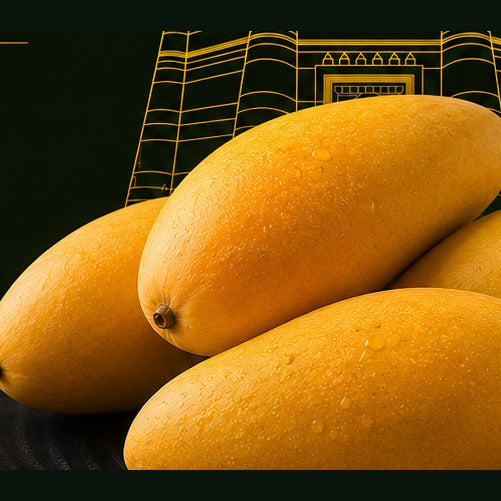
Sindhri vs Dussehri — Pakistan's Two Mainstream Mangoes
Sindhri: larger (300–500g), juicier, brighter citrusy sweetness, peaks June–July, signals season's start. Dussehri: smaller (150–250g), sweeter Brix-wise but less aromatic, peaks July–August, abundant and affordable. Both are 'everyday' Pakistani mangoes — neither is a premium gift variety like Chaunsa or Anwar Ratol.
Two mainstream varieties — different roles
Sindhri and Dussehri are Pakistan's two most-consumed mango varieties by volume. They're not premium gift varieties like Chaunsa — they're the everyday mangoes that fill Pakistani fruit shops, family kitchens, and snack bowls. Each has its own character:
| Factor | Sindhri | Dussehri |
|---|---|---|
| Origin | Sindh province (Mirpurkhas) | Lucknow Mughal gardens |
| Peak season | Mid-June – mid-July | Mid-July – mid-August |
| Average fruit size | Large (300–500g) | Small-medium (150–250g) |
| Skin color (ripe) | Smooth golden yellow uniform | Cream-yellow (lighter) |
| Aroma | Mild, clean, citrusy | Modest, slightly grassy-sweet |
| Sweetness (Brix) | 17–20° | 18–21° |
| Flesh texture | Fiberless, very juicy | Cream-pale yellow, fiberless, very smooth |
| Seed | Medium-large flat | Very small, almost flat |
| Flesh-to-seed ratio | Good | Excellent (small seed) |
| Travel tolerance | Excellent (thick skin) | Moderate (thin skin) |
| Annual yield per tree | 100–200 kg | 100–180 kg |
| Commercial pricing | Mid-premium | Affordable mainstream |
| Best for | Family eating, breakfast, kids, travel-friendly gifts | Daily snack, kids, lunchbox |
When you'd choose Sindhri
- You want the early-season Pakistani mango (June availability)
- You want larger fruit per piece
- You're sharing — larger fruit serves more people
- You're shipping mangoes long-distance (thicker skin)
- You prefer bright citrusy sweetness without strong aroma
When you'd choose Dussehri
- You want the easiest mango to eat (small seed, smooth flesh)
- You're feeding kids who prefer small individual fruit
- You want maximum sweetness per gram
- You're on a budget — Dussehri is typically cheaper
- It's mid-July to August (Sindhri season has ended)
What we offer
Our family farm focuses on premium-tier varieties for direct-to-consumer sales. We grow Sindhri (the Multani Sindhri Premium Box) but don't currently distribute Dussehri commercially through our boxes. For Dussehri, Pakistani retail markets are your best access — it's widely available during July–August at fruit shops nationwide.
Pricing comparison
- Sindhri (premium tier, our farm): Rs 2,850 / 5kg
- Dussehri (Pakistani retail): Rs 250–400 / kg (varies by region and quality)
- Sindhri (Pakistani retail): Rs 350–500 / kg
Dussehri's lower price reflects abundance and accessibility, not lower quality per se.
FAQs
Sindhri or Dussehri — which is sweeter?
Dussehri (18–21° Brix) is slightly sweeter Brix-wise than Sindhri (17–20°). The difference is small. Sindhri tastes "brighter" because of citrusy notes.
Which is larger?
Sindhri is significantly larger (300–500g) vs Dussehri (150–250g).
Which is better for kids?
Dussehri — smaller fruit means kids can eat one without leftovers. Sindhri's larger size suits sharing.
Which has more fiber?
Both are essentially fiberless. Sindhri may have very slight fiber near the stone; Dussehri less so.
Do you sell Dussehri?
We focus on premium-tier varieties (Chaunsa, Sindhri, Langra, Anwar Ratol). Dussehri is widely available in Pakistani retail markets.
Order Pakistan's premium mangoes
Browse our 2026 harvest — hand-picked, naturally ripened, cold-chain shipped Pakistan-wide.
— The Malik family
1636/13-A, Pir Khursheed Colony, Multan, 66000, Pakistan